LEARN

Dusky Lory

( Chalcopsitta fuscata )

Also known as:
White-rumped Lory, Dusky-orange Lory

Also known as:
White-rumped Lory, Dusky-orange Lory

Geography:

DID YOU KNOW?

The Dusky Lory roosts communally in groups of up to a thousand birds.

<p><em>Chalcopsitta</em></p>
Genus:

Chalcopsitta

<p><em>fuscata</em></p>
Species:

fuscata

Size:

25 cm (9.75 in)

Weight:

140-190 g (5-6.7 oz)

Subspecies including nominate:

one

Colour Adult:

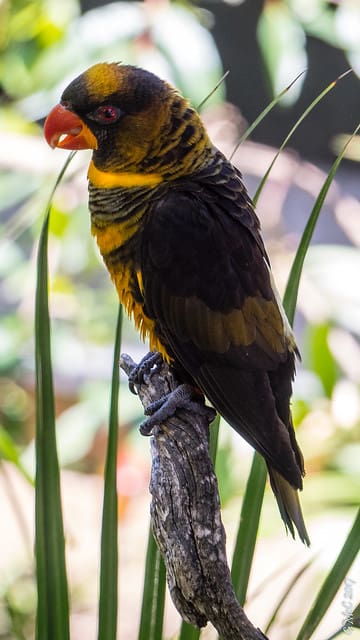
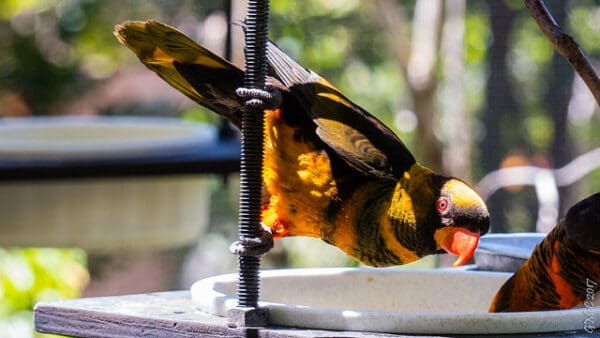
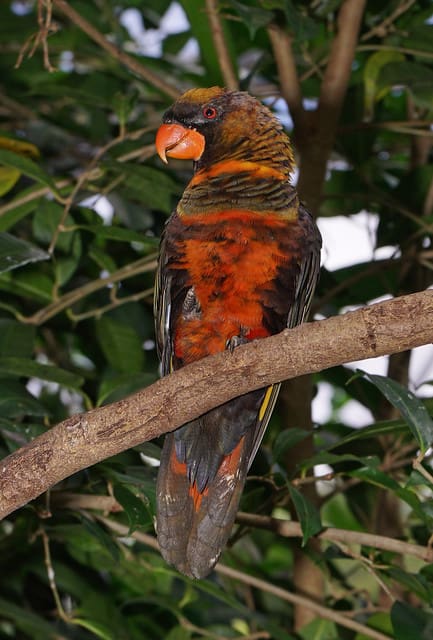
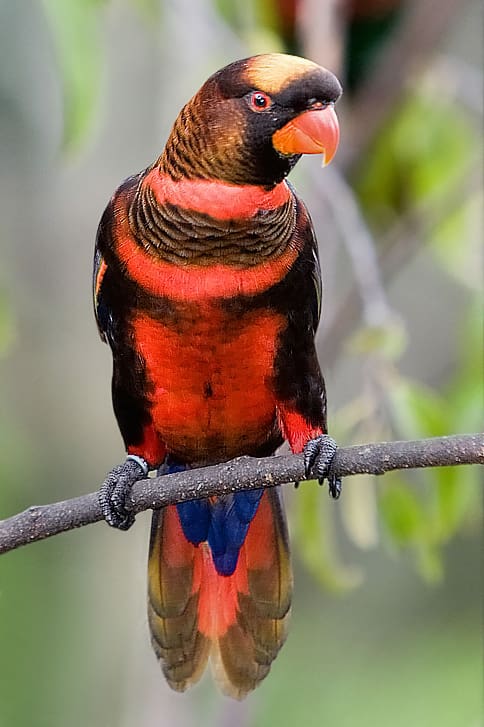
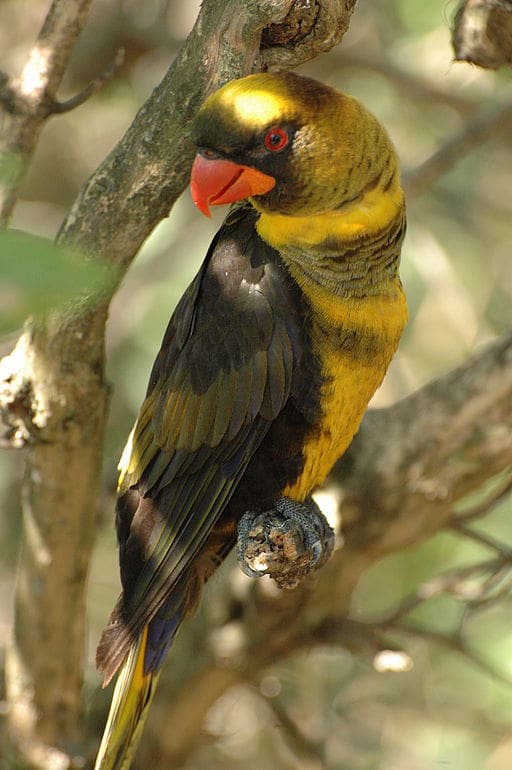
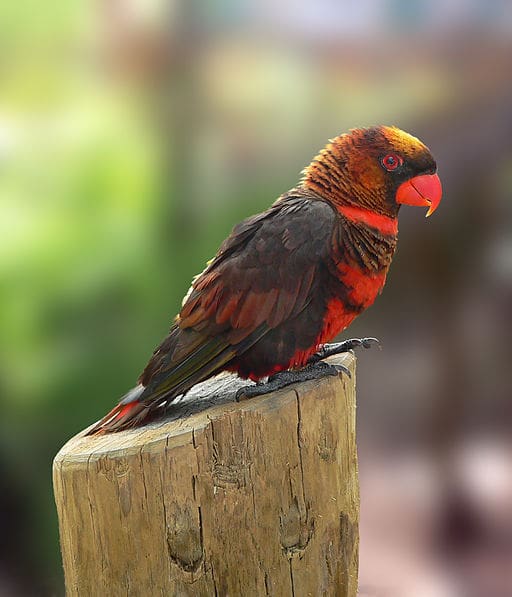
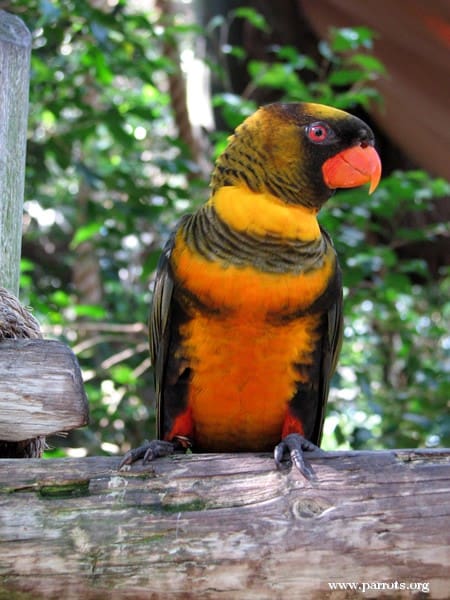
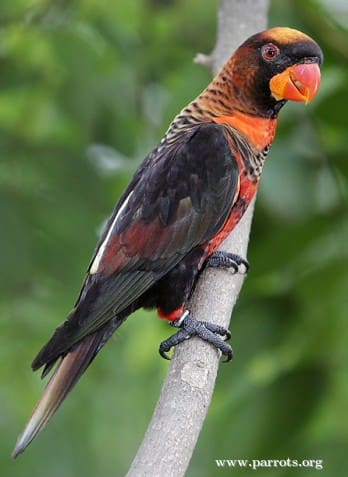
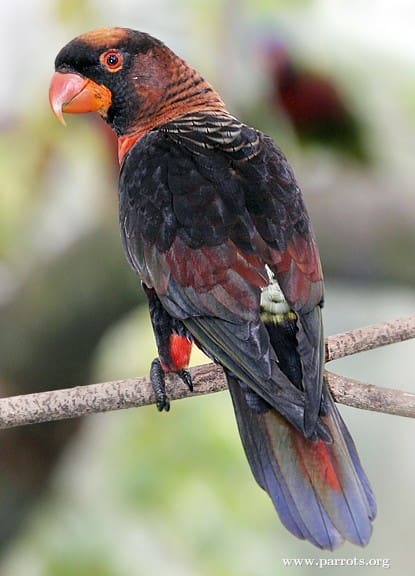
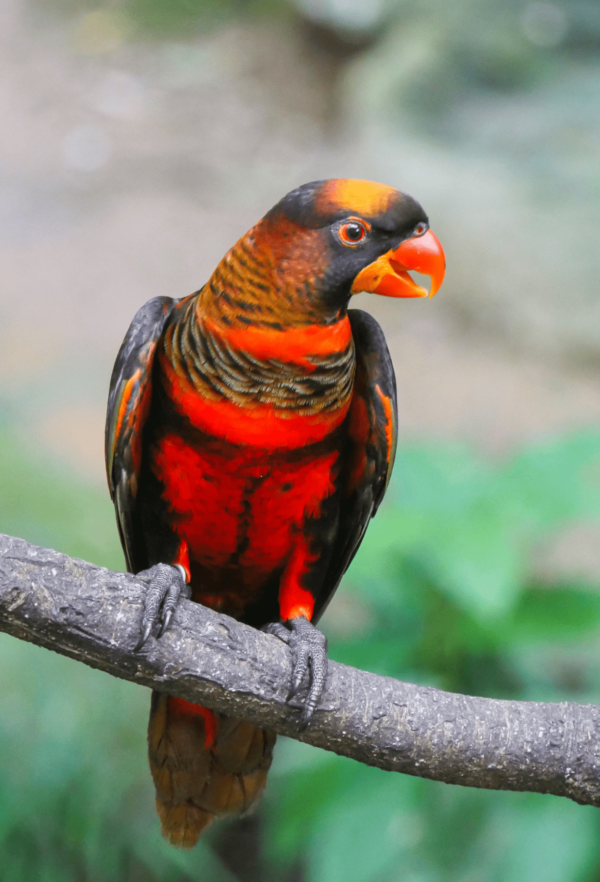
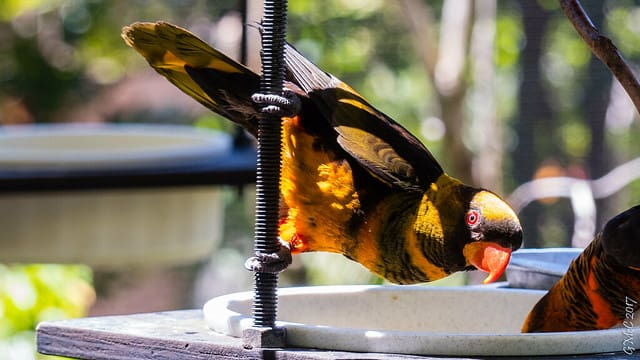
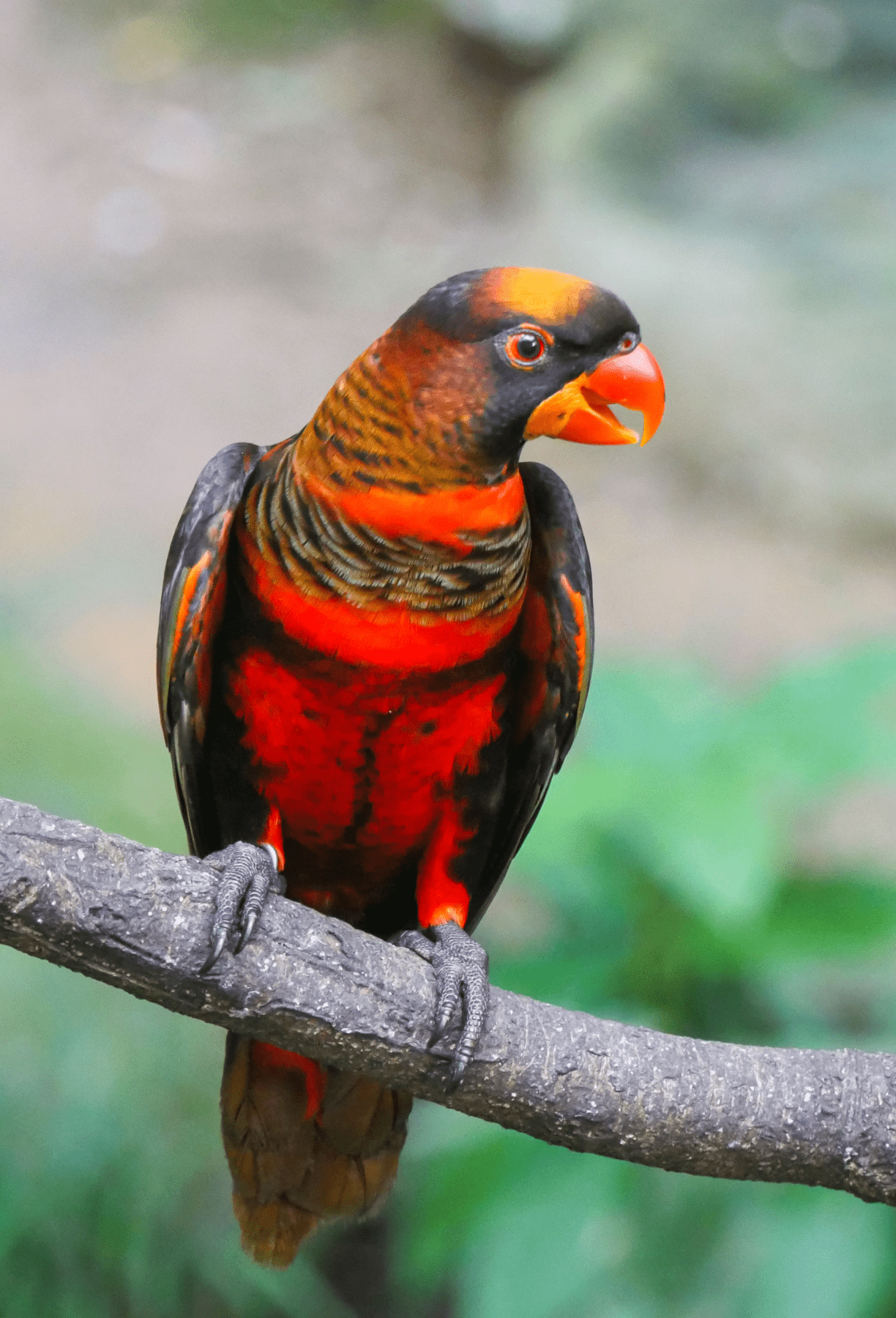
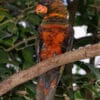
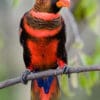
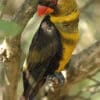
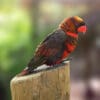
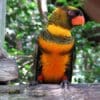
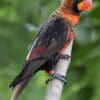
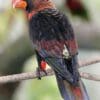
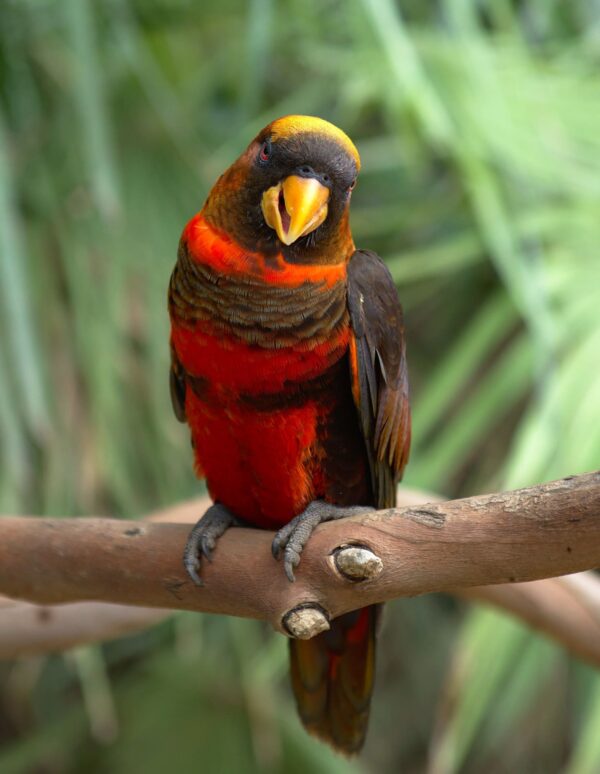
Both adults have two colour phases with varying tones; in general plumage dusty olive/brown; dull yellow crown; band on foreneck yellow or red/orange, with occasionally a second band across chest; yellow or red/orange lower breast to abdomen; buff/white back and rump; brown and yellow or red/orange underwing coverts; pair of underwing bands orange/yellow; yellow/olive tail. Beak deep orange. Skin at base of beak bare and orange. Eye red.

Colour Juvenile:

As in adults but with more extensive yellow or orange/red markings on underparts; dull buff/yellow back and rump. Beak brown/black with yellow at base. Eye yellow/grey.

Call:

Calls heard as harsh and grating screeches.

Xeno-canto Wildlife Sounds-Dusky Lory

More Information:

Avibase

Content Sources:

CITES
BirdLife International
Cornell Lab of Ornithology/Birds of the World
Parrots: A Guide to Parrots of the World, Juniper and Parr, 1998
Parrots of the World, Forshaw and Cooper, 1977. 2010 edition
Parrots of the World, Forshaw, 2006.
Parrots in Aviculture, Low, 1992.
Parrots: Their Care and Breeding, Low, 1986.

Captive Status:

Fairly common

Longevity:

28-32 yrs

Housing:

Enclosure with drain in floor (with sloped concrete if possible), or suspended aviary over concrete base. 2 x 1 x 2 m (6.5 x 3.3 6.5 ft) if possible.

Diet:

Nectar, either commercial or homemade from lactose-free baby cereal, honey and malt extract or molasses, mixed with filtered water, made fresh once or twice daily, this comprising at least 40 percent of the diet; fruit such as: apple, pear, banana, cactus fruits, pomegranate; vegetables such as: carrot, celery, fresh corn on the cob, green beans, green leaves or peas in the pod; dried figs soaked in water for a few hours; spray millet; small amount of soaked or sprouted sunflower seed and small amount of canary seed and/or oats.

Enrichment:

Enjoys bathing. Provide unsprayed, bird-safe flowering branches for foraging and chewing. Provide roosting box with thick removable material to be cleaned out every two weeks.

Nest Box Size:

9″ x 9″ x 14″ (23 cm x 23 cm x 35.5 cm) vertical box.

Clutch Size:

2

Fledging Age:

10 weeks

Hatch Weight:

Peak Weight:

Weaning Weight:

World Population:

Unknown, stable.

IUCN Red List Status:
Least Concern

CITES Listing:
Appendix II

Threat Summary:

Not globally threatened. Reported as common and gregarious, sometimes forming roosts of several thousands of birds at a time.

Range:

Throughout New Guinea, except for the highest areas; also the islands of Yapen (in Geelvink Bay) and Salawati (in Southwest Papua).

Habitat:

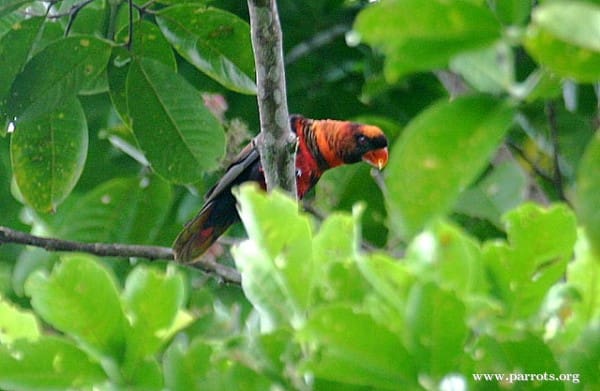
Found up to 2400 m (7872 ft) in habitats ranging from lowlands and hills to 1500 m (4920 ft) up to mountain areas. Prefers humid forest margins, secondary growth, savanna, plantations and some inhabited areas.

Wild Diet:

Feeds on nectar, fruits and perhaps pollen of Elaeocarpus sphaericus, Schefflera, Sloanea, Pittosporum ramiflorum, coconut blossoms and insects, including the pupae of teak moth Hyblaea puera. May also take mango and other cultivated tree fruits.

Ecology and Behaviour:

Very social, forming large, boisterous flocks. Relies on availability of flowering trees for food and is therefore nomadic. Roosts communally in large groups.

Clutch and Egg Size:

2 rounded eggs, 28.0 x 24.0 mm (1.1 x 1.0 in)

Breeding Season:

November-August. Nest is in cavity in tall montane tree.

Related Links:

Join Our Flock

FlockTalk our monthly newsletter for parrot people everywhere:

+ News from the world of parrots

+ Updates on wild parrot projects

+ Inspiring updates from partners

+ Real stories from the parrot flock

+ Plus, expert tips for caring for your feathered friends at home.


Stay In The Loop, Sign Up Now.
FlockTalk: our monthly newsletter for parrot people everywhere:

Parrot news. Conservation wins. Pet care tips. All in one monthly email.

We do not sell or share your information with anyone