LEARN

Red-and-green Macaw

( Ara chloropterus )

Also known as:
Green-winged Macaw, Red-and-blue Macaw, Red-blue-and-green Macaw

Also known as:
Green-winged Macaw, Red-and-blue Macaw, Red-blue-and-green Macaw

Type :
Geography:

DID YOU KNOW?

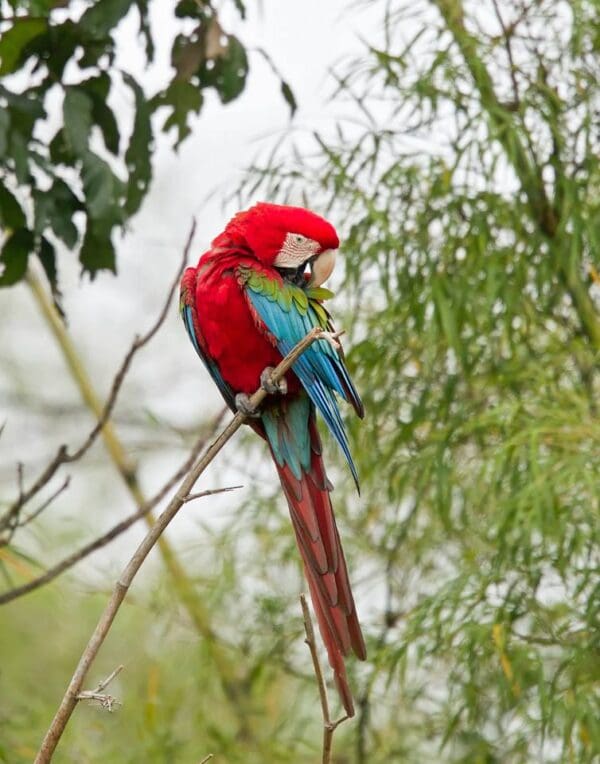
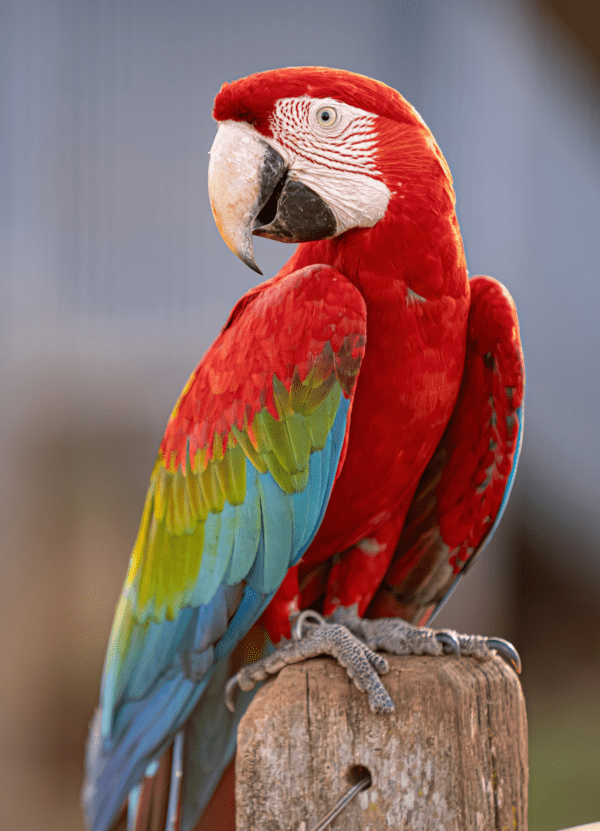
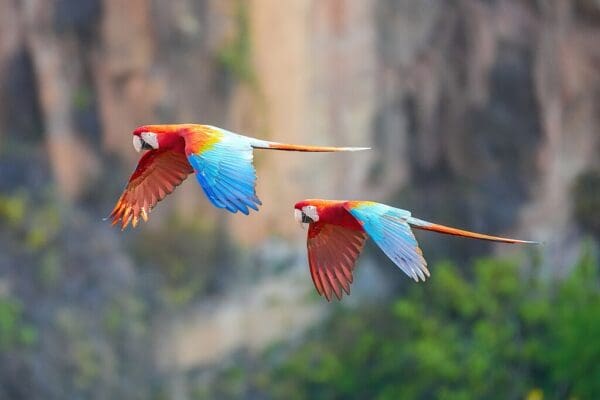
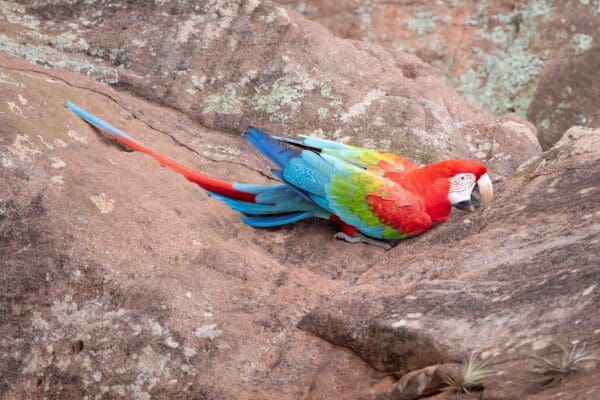
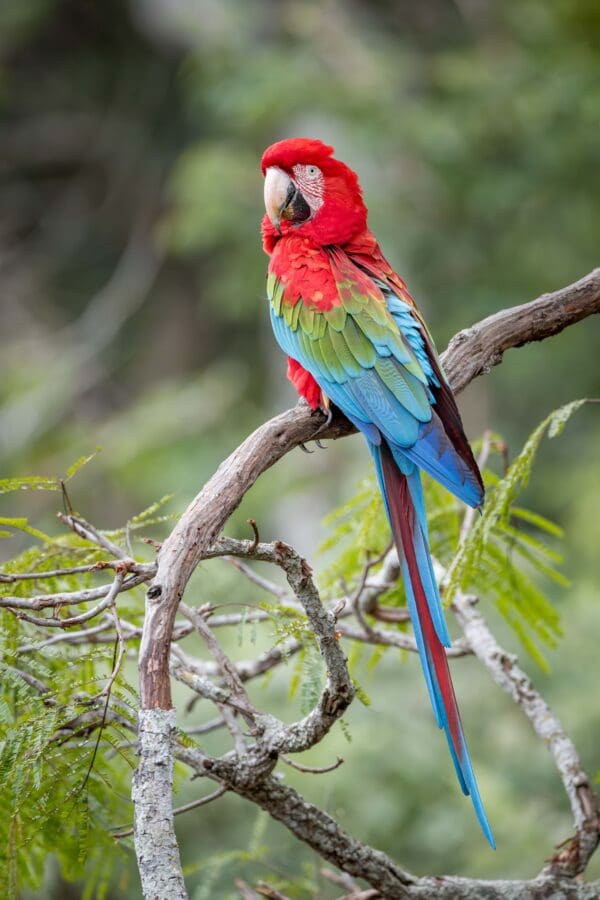
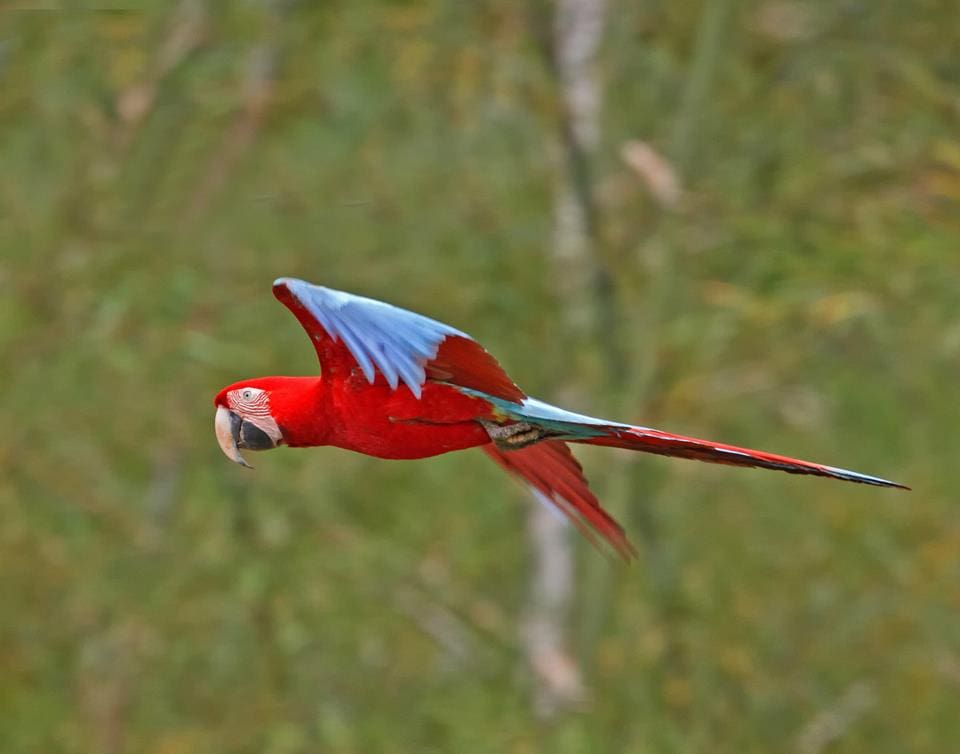
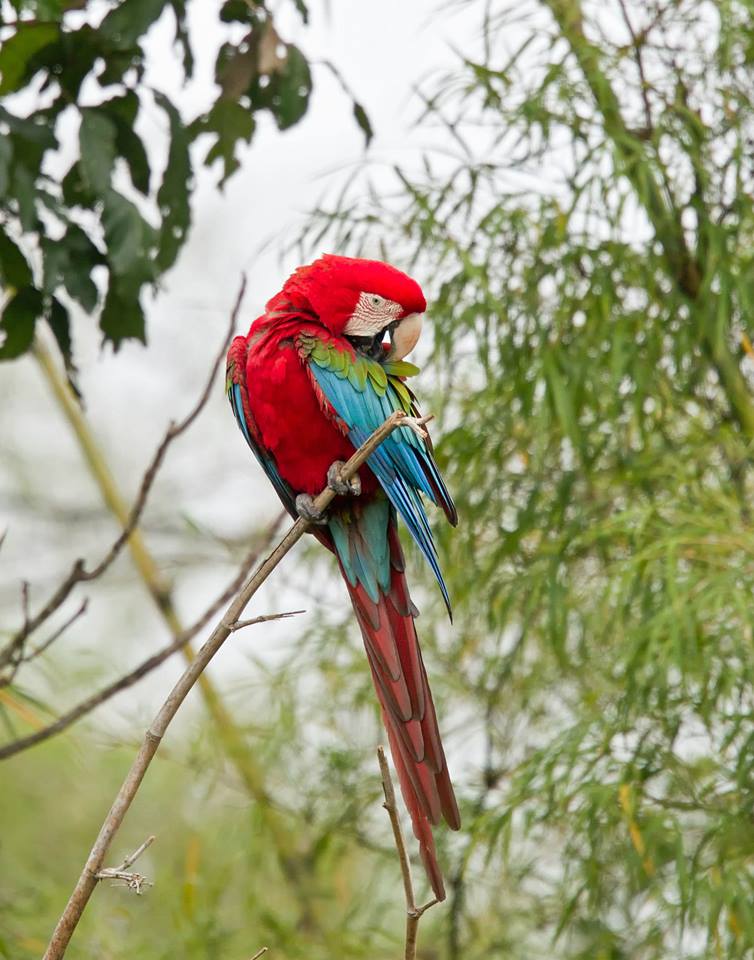
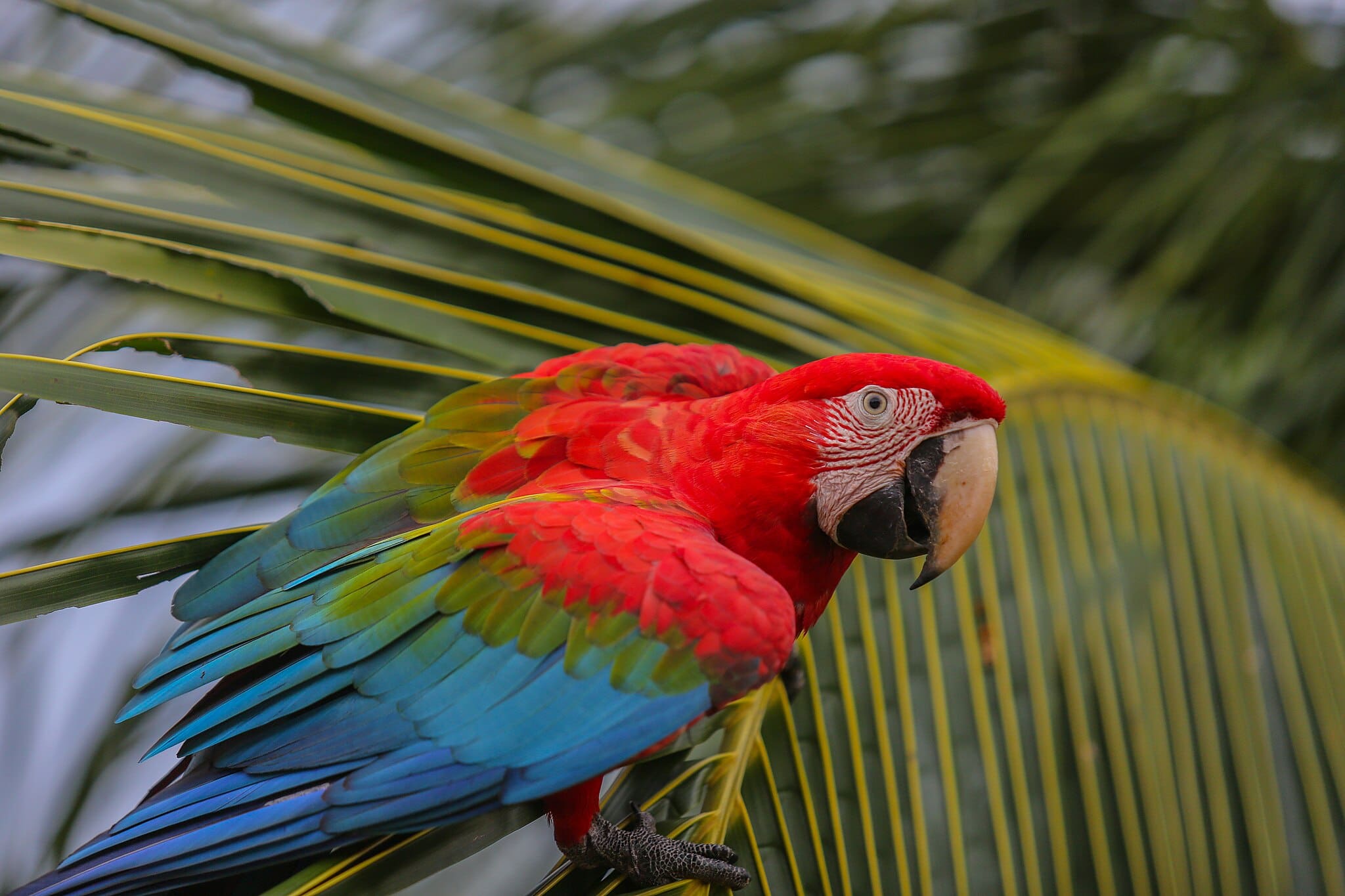
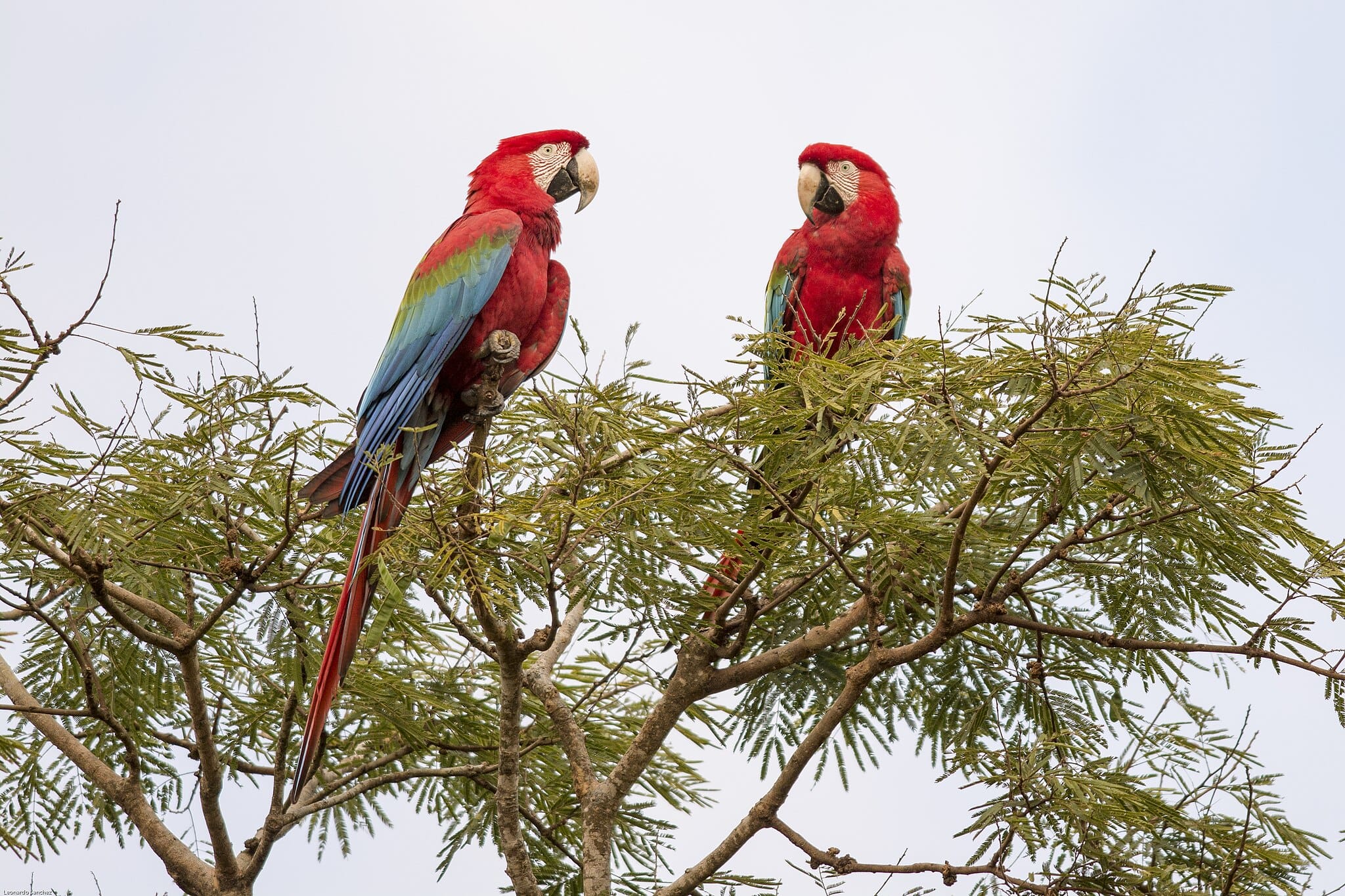
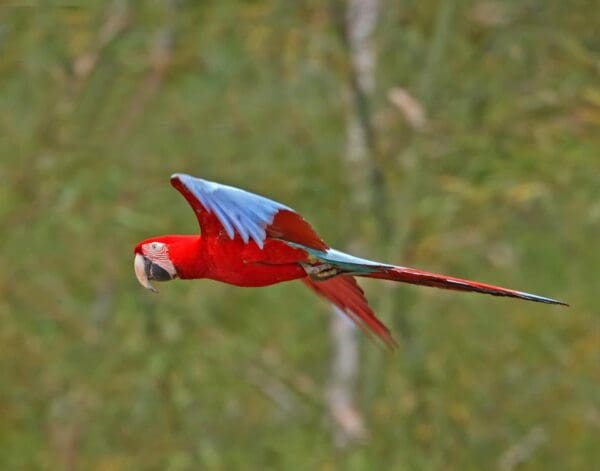
The Red-and-green Macaw is a darker shade of red than the similar Scarlet Macaw, and has a shorter tail.

<p><em>Ara</em></p>
Genus:

Ara

<p><em>chloropterus</em></p>
Species:

chloropterus

Size:

90 cm (35 in)

Weight:

1050-1320 g (36.75-46.2 oz)

Subspecies including nominate:

one

Colour Adult:

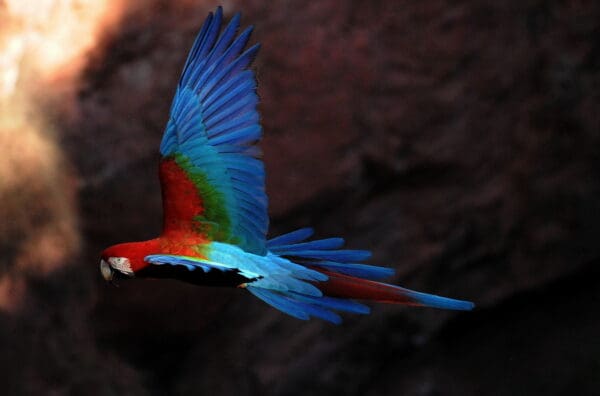
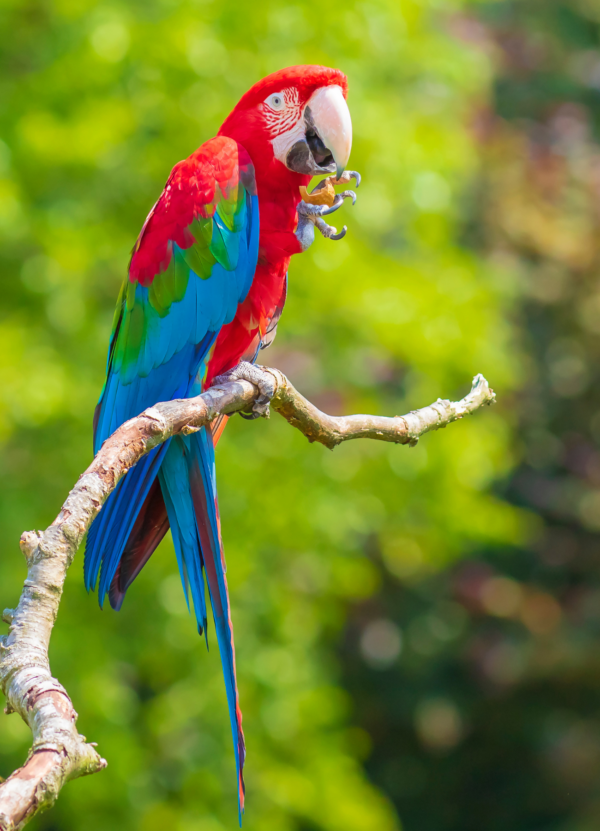
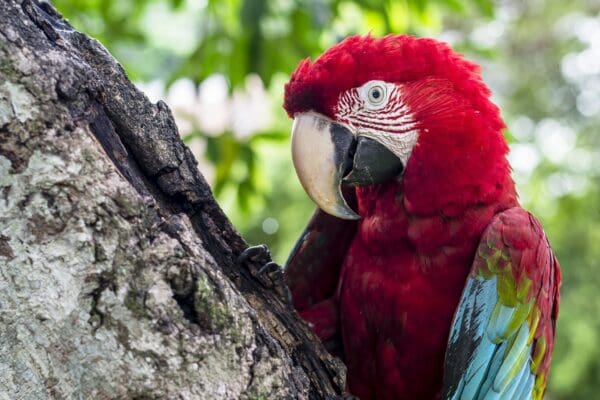
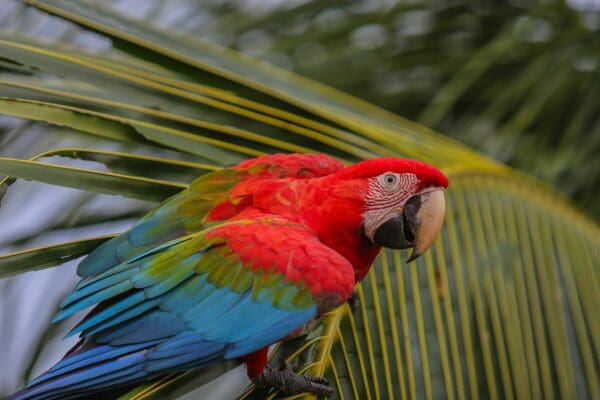
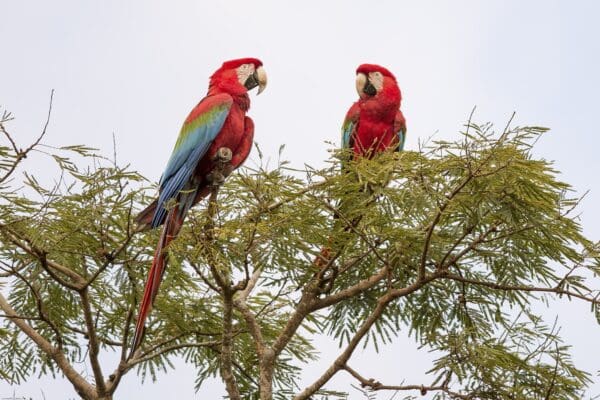
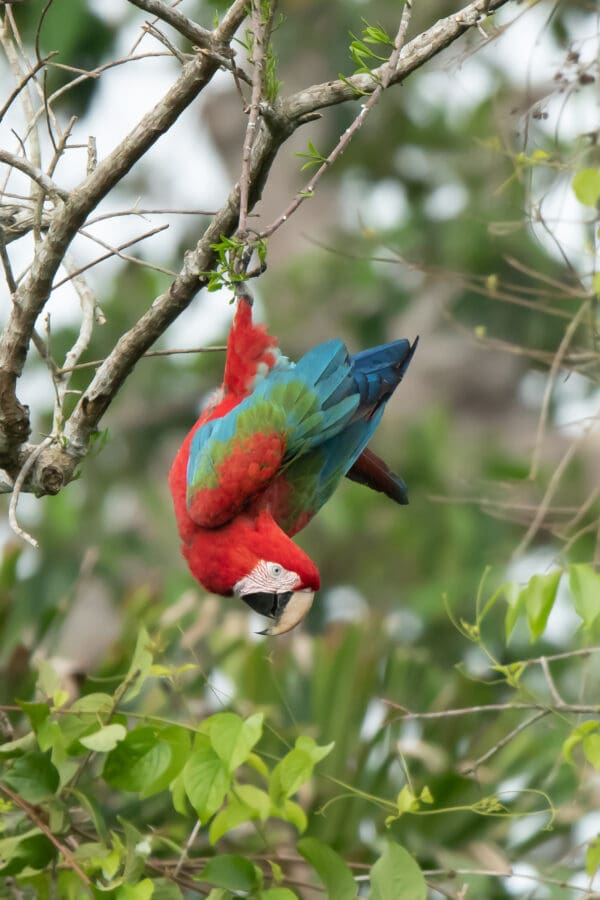
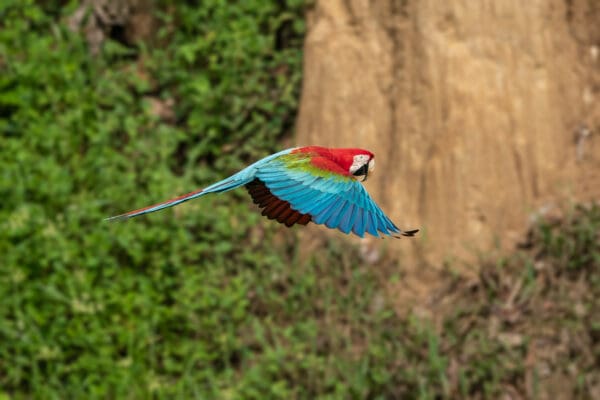
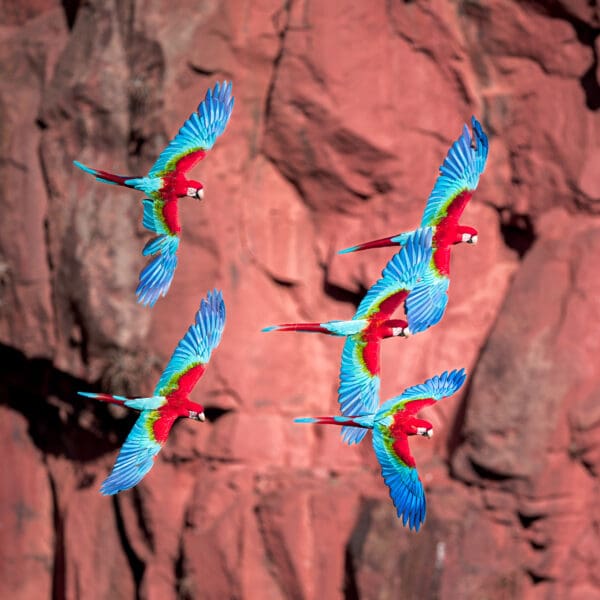
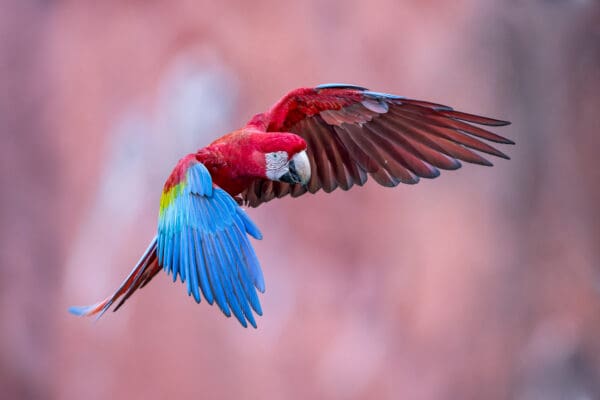
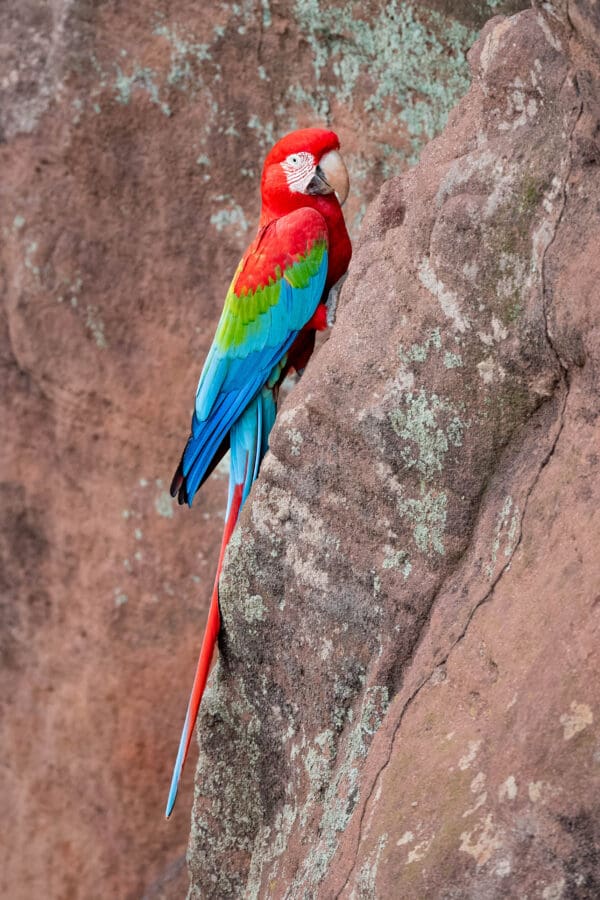
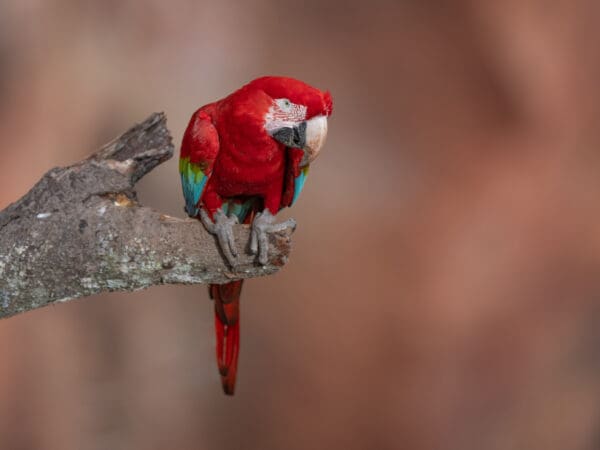
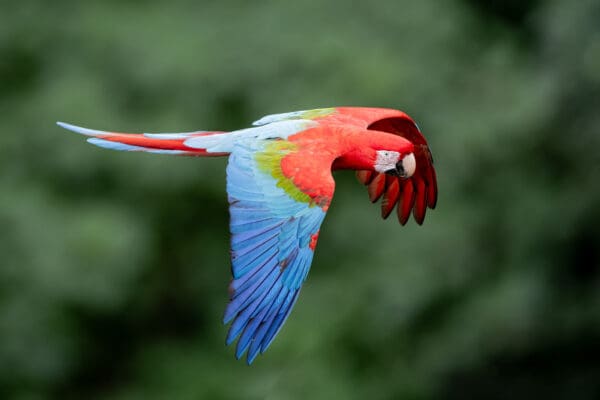
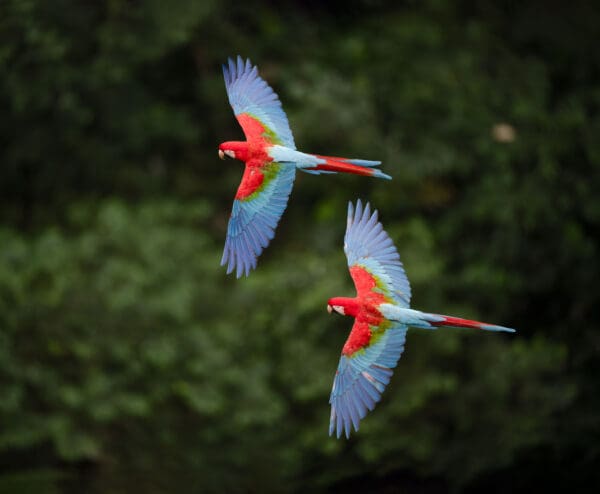
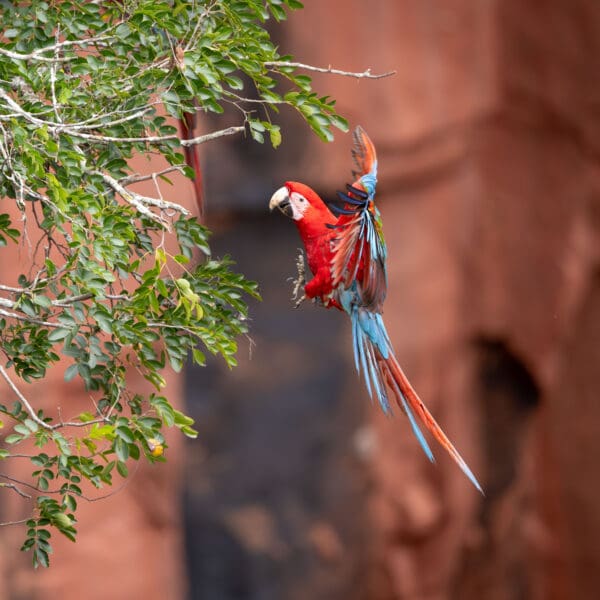
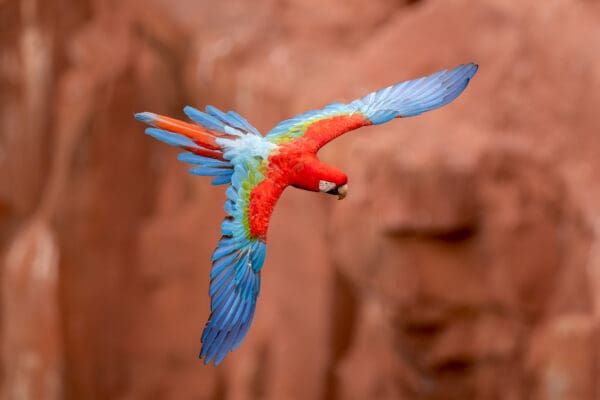
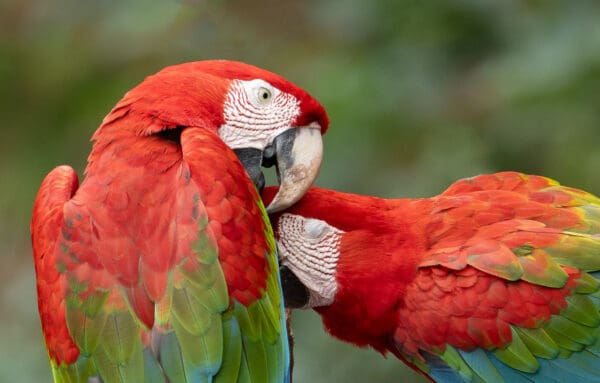
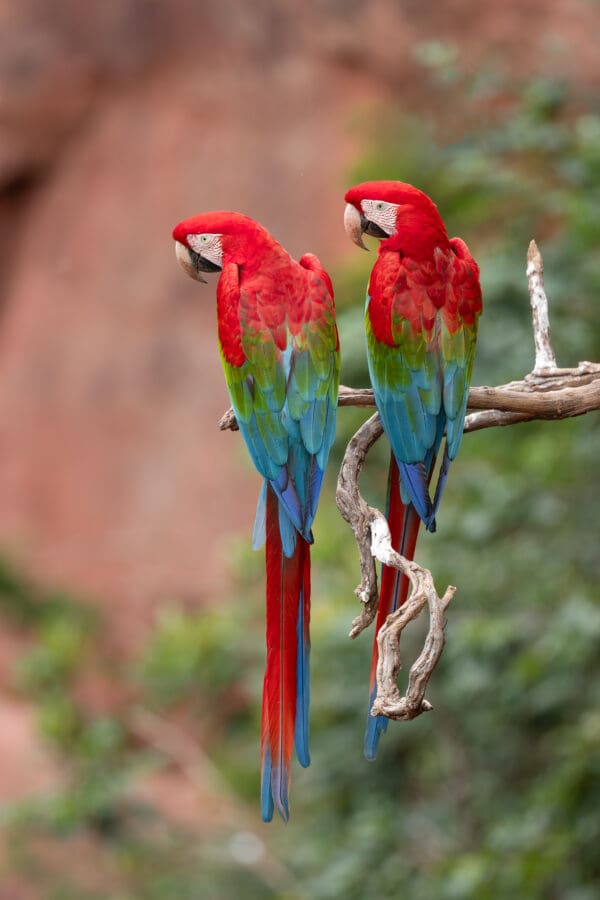
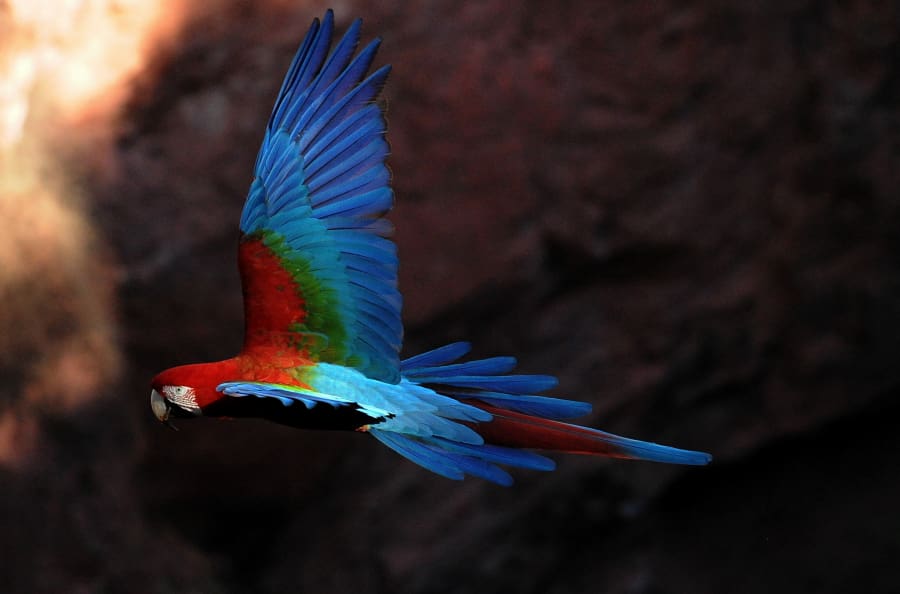
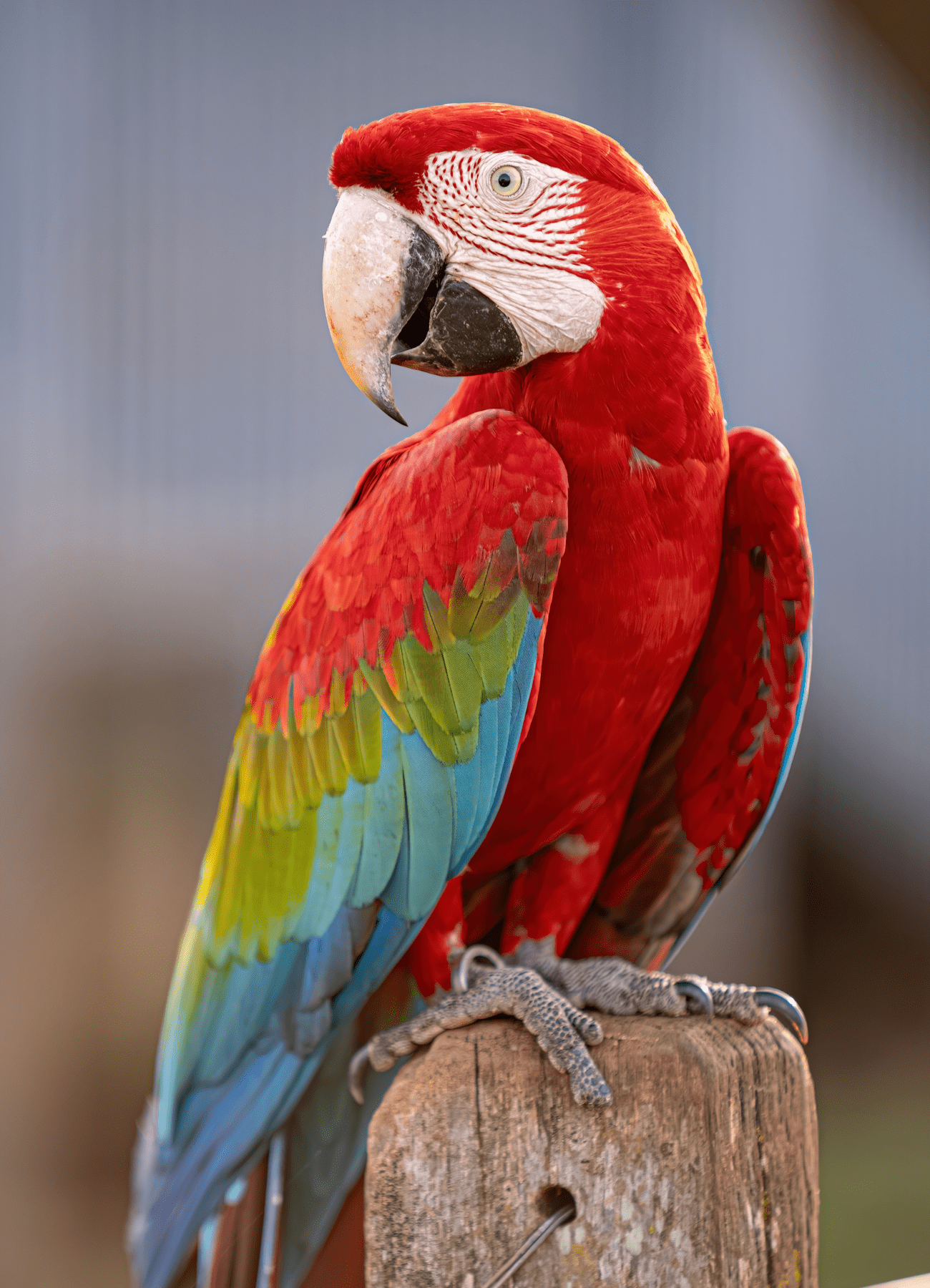
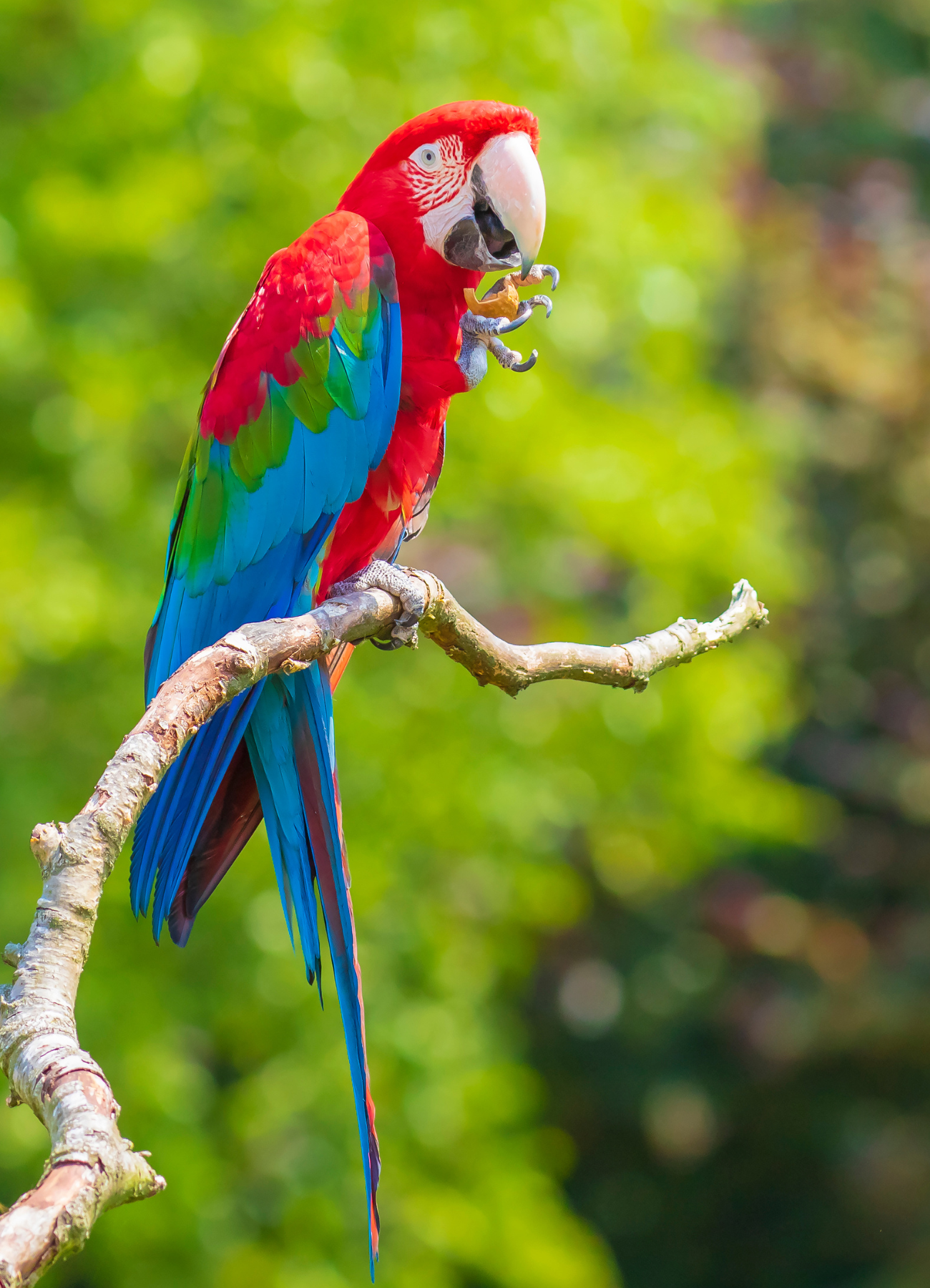
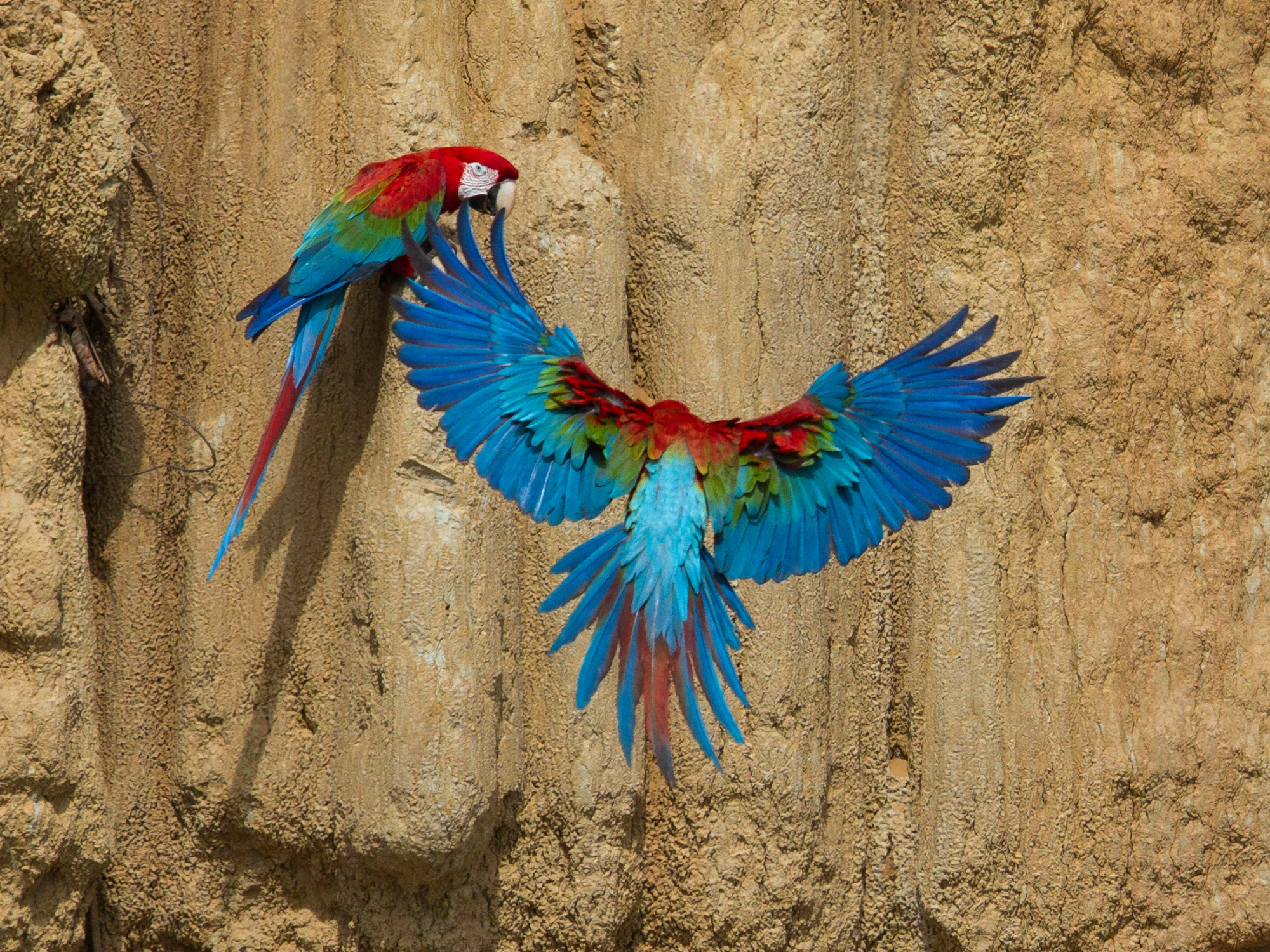
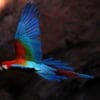
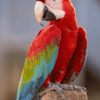
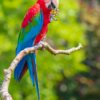
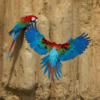
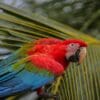
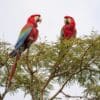
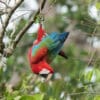
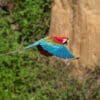
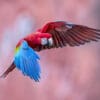
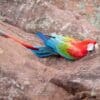
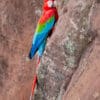
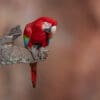
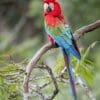
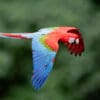
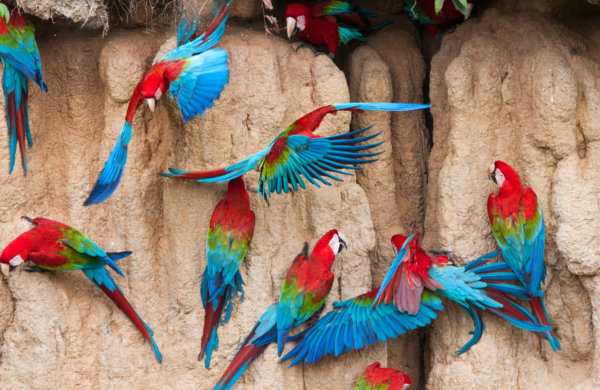
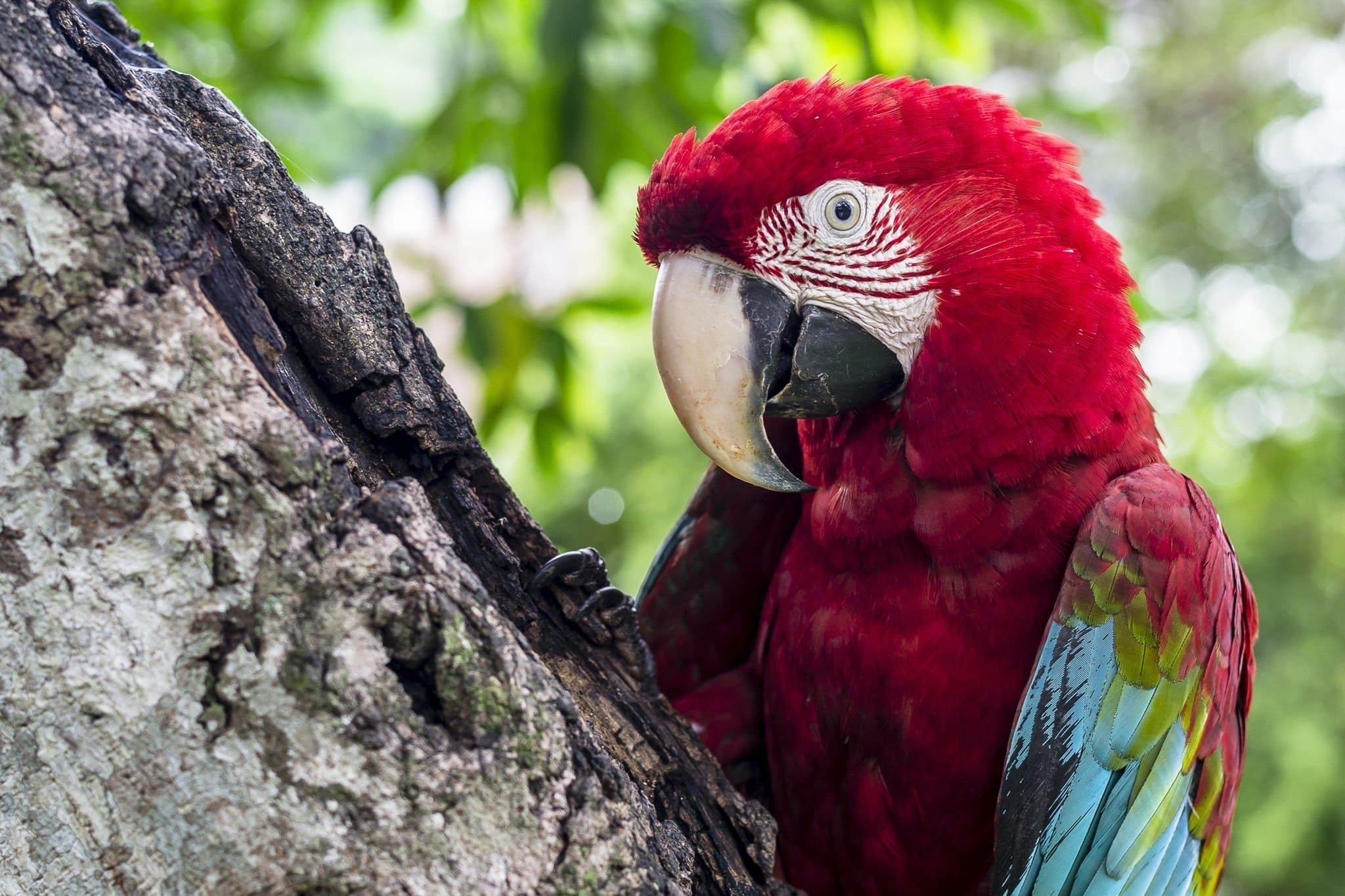
Both adults dark red in general; green middle wing coverts, scapulars and tertiary feathers; back, rump and tail coverts blue; blue tail with red tips. Upper mandible horn in colour with black on sides; lower beak grey/black. Cere bare and face white with evident red lines of feathers. Eye yellow.

Colour Juvenile:

Immature as in adult but with shorter tail. Lower mandible grey with white at base. Eye grey.

Call:

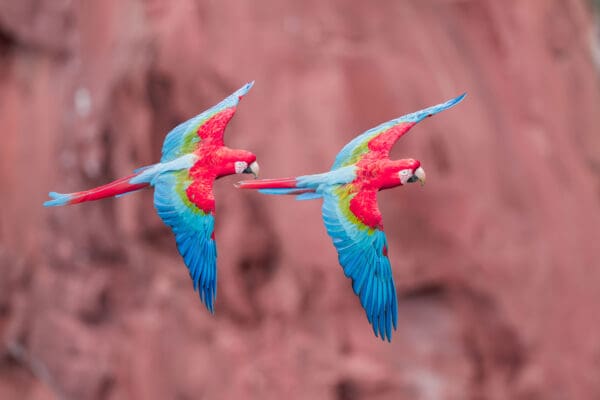
Strong voice but usually less harsh than Scarlet Macaw (Ara macao).  Some calls low and strident; in flight prolonged.  Other calls include yelping and cawing, or shrieking.

Xeno-canto Wildlife Sounds-Red-and-green Macaw

More Information:

Avibase

Content Sources:

CITES
BirdLife International
Cornell Lab of Ornithology/Birds of the World
A Guide to Parrots of the World, Juniper and Parr, 1998
Parrots of the World, Forshaw and Cooper, 1989. 2010 edition
Parrots of the World, Forshaw, 2006.
Parrots in Aviculture, Low, 1992.
Psittacine Aviculture, Schubot, Clubb and Clubb, 1992.
Avian Pediatric Seminar Proceedings, various authors, 1988.

Captive Status:

Widespread in captivity.

Longevity:

60 yrs

Housing:

Should have access to a large enclosure, 15 m (49 ft) long in which to fly for part of the year.

Diet:

Soaked or sprouted sunflower seed; walnuts, peanuts, pecans, Brazil nuts, pine nuts; corn on the cob, banana, orange and other fruits. Complete kibble for Macaws.

Enrichment:

Large macaw toys, chewables (fir branches, heat sterilized pine cones, bird-safe, unsprayed wood), large perches, swings, ladders; regular bathing.

Nest Box Size:

Horizontal box, 16″ x 16′ x 48″ (40.6 cm x 40.6 cm x 122 cm) or 35 gallon pickle barrel, or 55 gallon barrel.

Clutch Size:

2 to 3

Fledging Age:

Around 100 days.

Hatch Weight:

Peak Weight:

Weaning Weight:

World Population:

50,000-500,000 mature individuals, decreasing.

IUCN Red List Status:
Least Concern

CITES Listing:
Appendix II

Threat Summary:

The species is described as ‘fairly common.’ Is undergoing a large, significant decline. Affected by loss of habitat, uncontrolled hunting and unsustainable exploitation for trade.

Range:

Found in eastern Panama through lowland Colombia, Venezuela, the Guianas and Brazil, south to Paraguay and west to eastern Ecuador, eastern Peru, and northeastern Bolivia; formerly in northern Argentina.

Habitat:

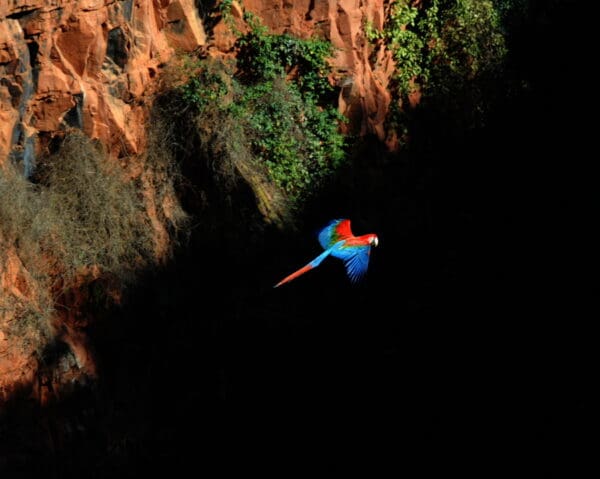
Found in humid lowland evergreen forest up to 500 m (1640 ft); also tropical deciduous forest and gallery woodland in savannas and llanos, and even undisturbed caatinga vegetation; favours hilly areas in Panama, where it reaches 1500 m (4921 ft).

Wild Diet:

Feeds on seeds of Jacaranda, Tetragastris, Sclerolobium, Hymenaea, Copaifera, Caryocar, Hevea, Eschweilera, Guarea, Abuta, Euterpe, Maximiliana, Micropholis, Sterculia, Spondias, Terminalia, Sapium, Croton, Parkia, the pulp of Inga, Quararibea, Rheedia, Eperua, Dipteryx, Schwartzia, Borismene, Sorocea, Mauritia, the fruits of Endopleura, and Bertholletia, the endosperm of Scheelea, arils of Virola, and leaves of Erythrina.
Ecology and Behaviour:

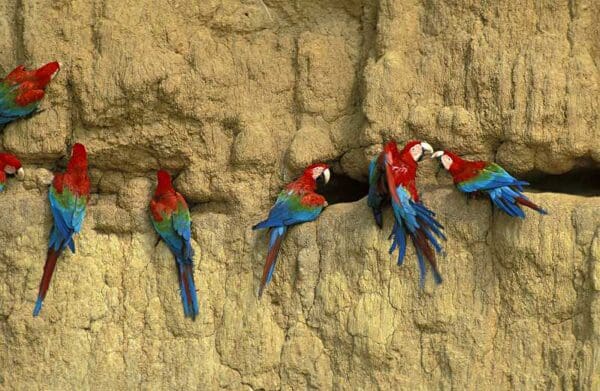
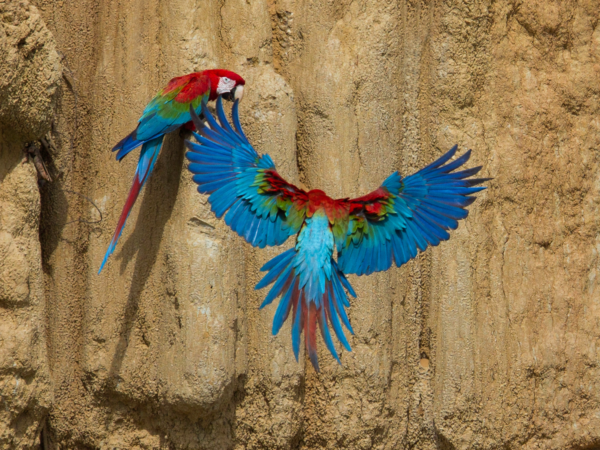
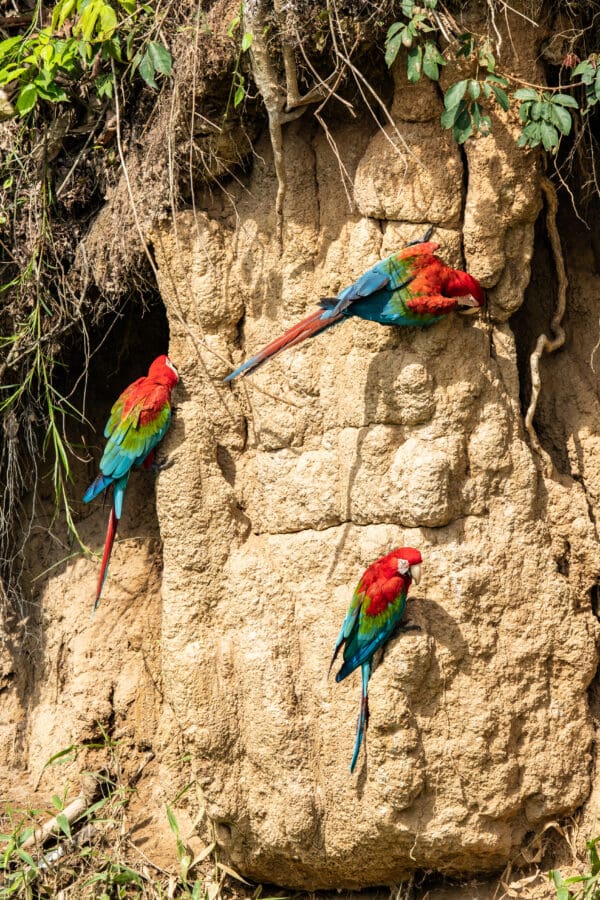
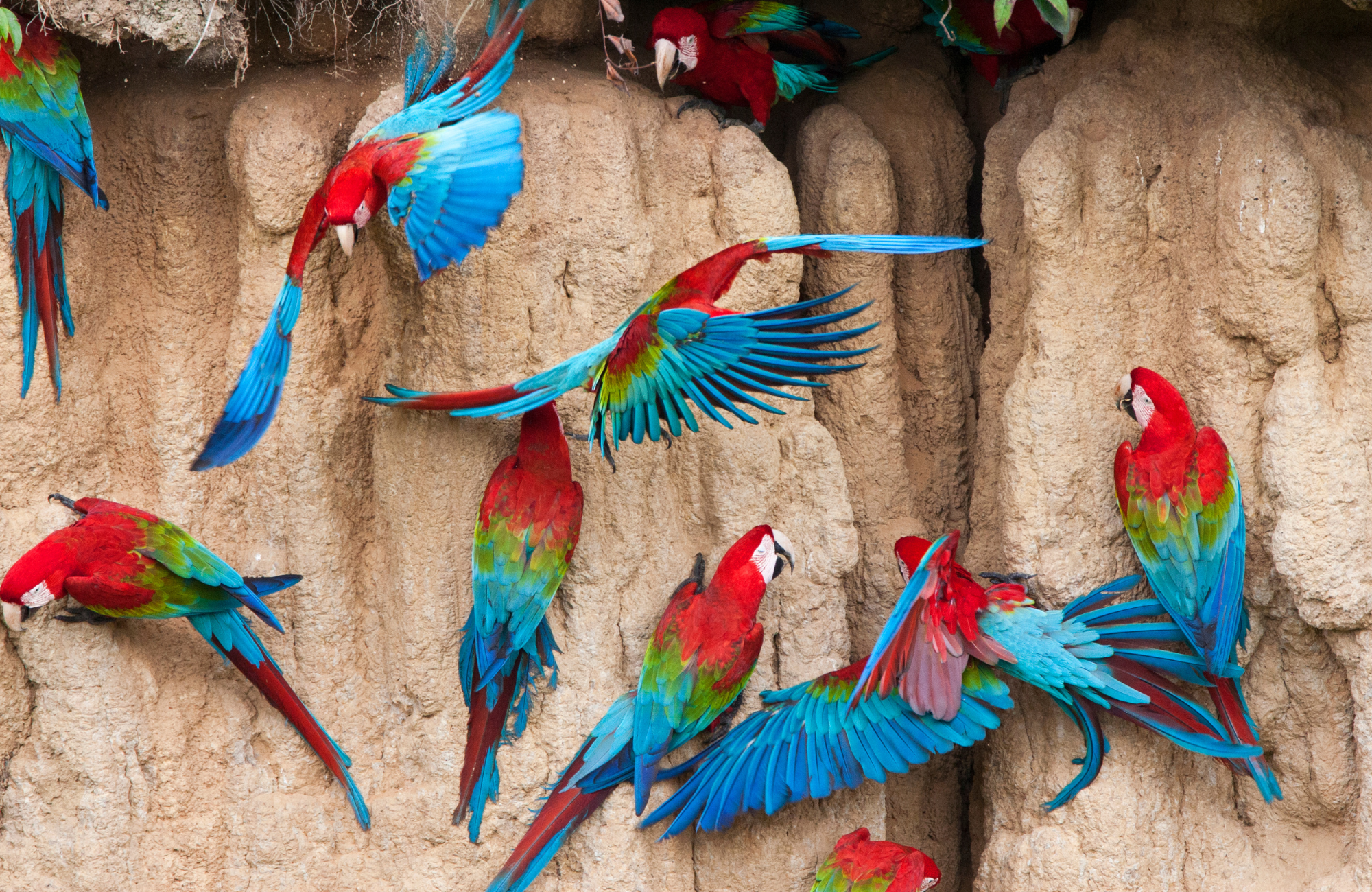
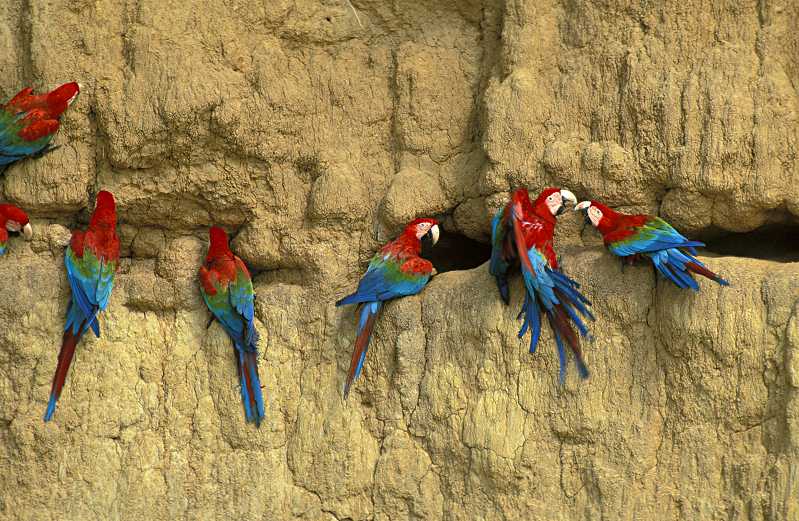
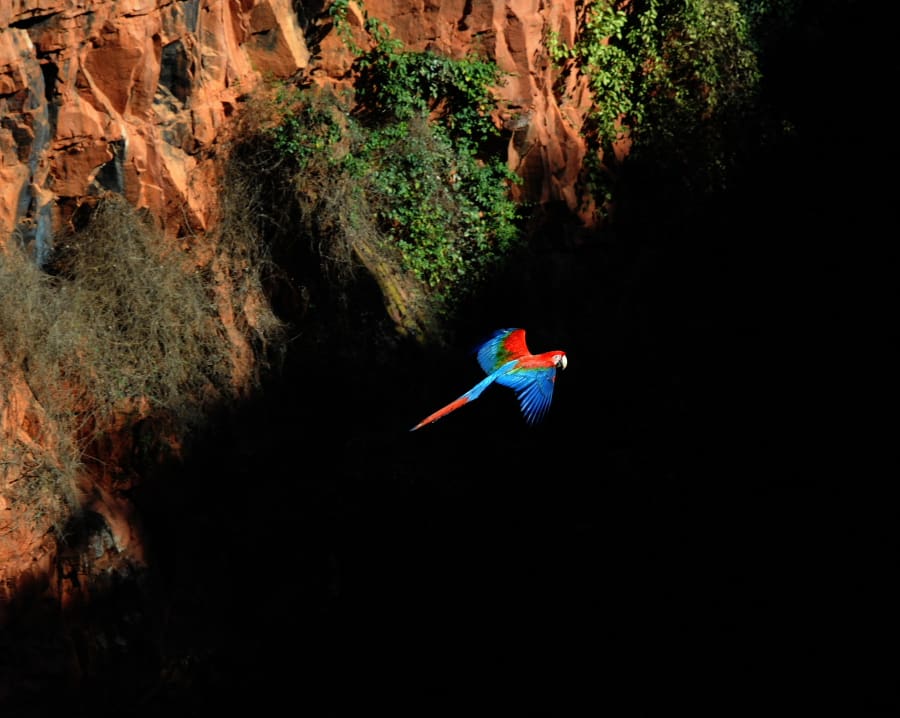
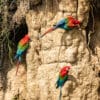
Forages for food in canopy. Nests in large tree cavities but also crevices in cliff faces. Generally in pairs or small flocks; less inclined to large congregations like Scarlet Macaws, but will associate with these and Blue-and-yellow Macaws.
Clutch and Egg Size:

2 to 3 elliptical eggs, 50 x 35 mm (2 x 1.4 in).

Breeding Season:

November-April in Peru; January in C Brazil; December Surinam. Nests are in tree cavities or sandstone cliffs (Bolivia) and riverbanks (S Brazil).

Related Links:

Join Our Flock

FlockTalk our monthly newsletter for parrot people everywhere:

+ News from the world of parrots

+ Updates on wild parrot projects

+ Inspiring updates from partners

+ Real stories from the parrot flock

+ Plus, expert tips for caring for your feathered friends at home.


Stay In The Loop, Sign Up Now.

FlockTalk: our monthly newsletter for parrot people everywhere:

Parrot news. Conservation wins. Pet care tips. All in one monthly email.

We do not sell or share your information with anyone