LEARN

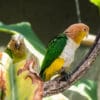
White-bellied Parrot

( Pionites leucogaster )

Also known as:
White-bellied Caique

Also known as:
White-bellied Caique

Geography:

DID YOU KNOW?

The White-bellied Parrot is one of two species of parrot with a white abdomen, the other being the Black-headed Parrot.

<p><em>Pionites</em></p>
Genus:

Pionites

<p><em>leucogaster</em></p>
Species:

leucogaster

Size:

23 cm (9 in)

Weight:

165-170 g (5.8-6 oz)

Subspecies including nominate:

three: P.l. leucogaster, P.l. xanthurus, P.l. xanthomerius

Colour Adult:

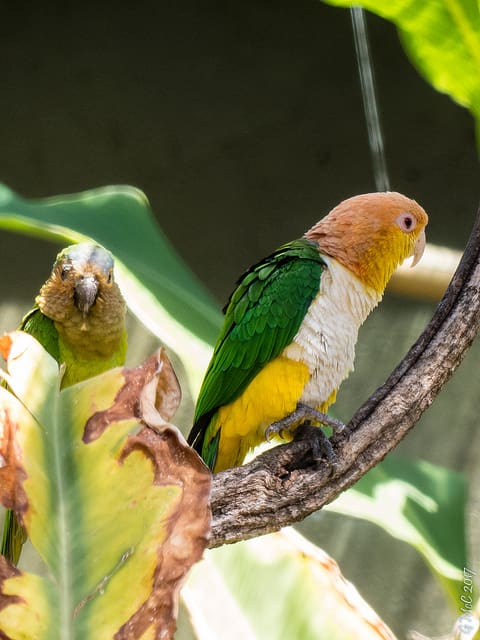
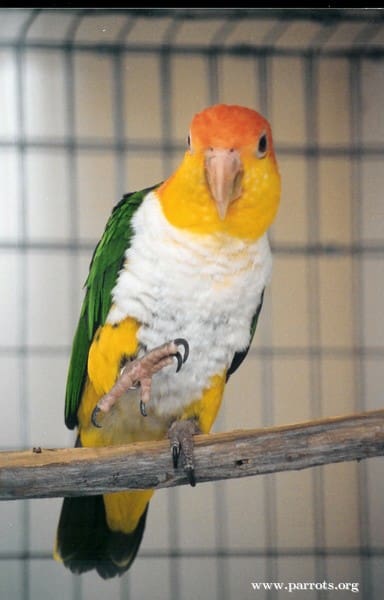
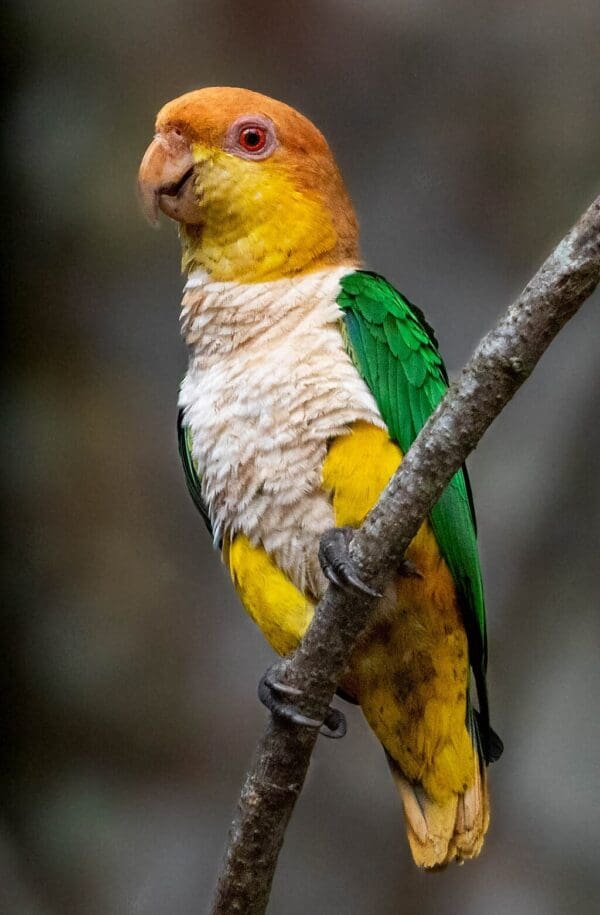
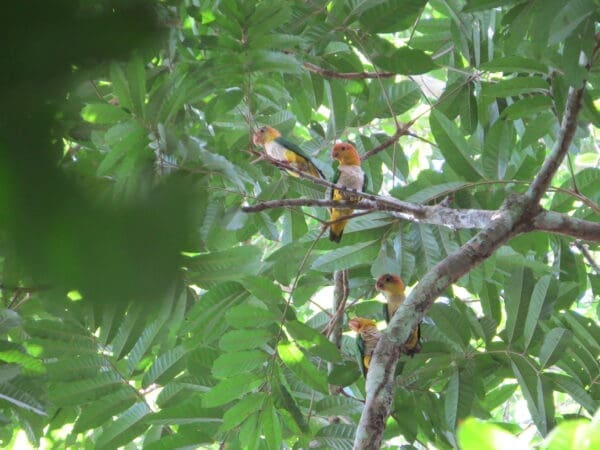
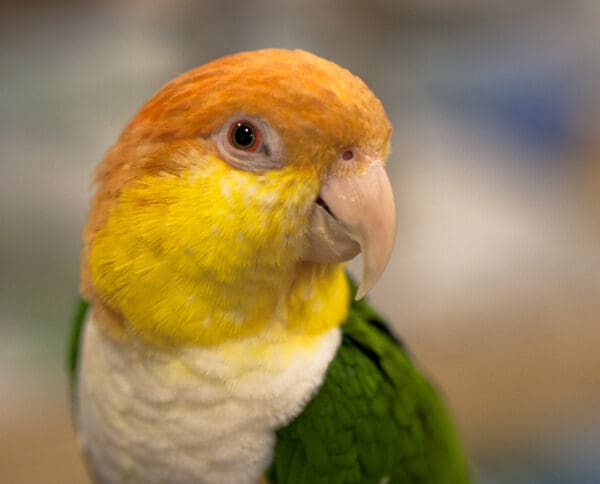
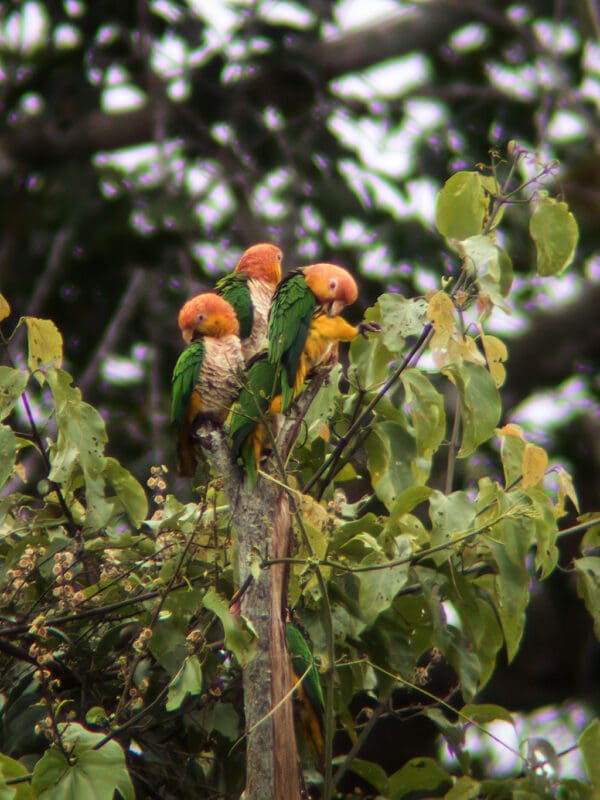
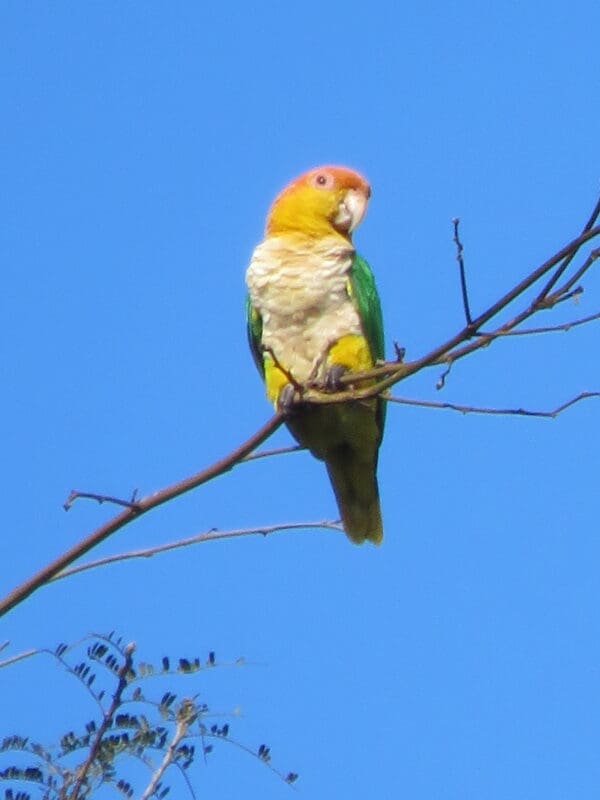
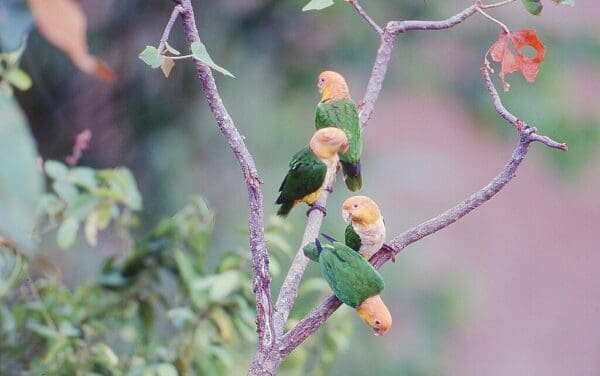
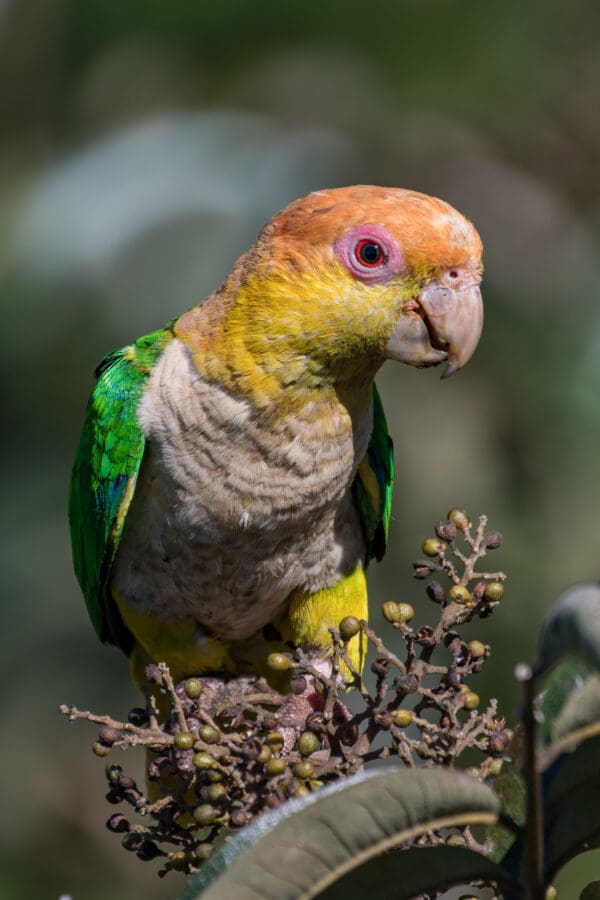
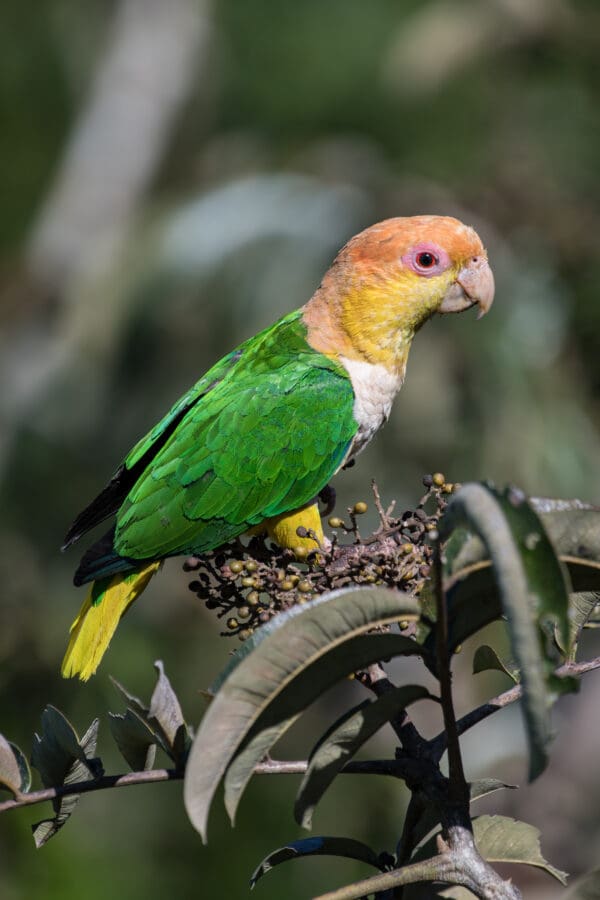
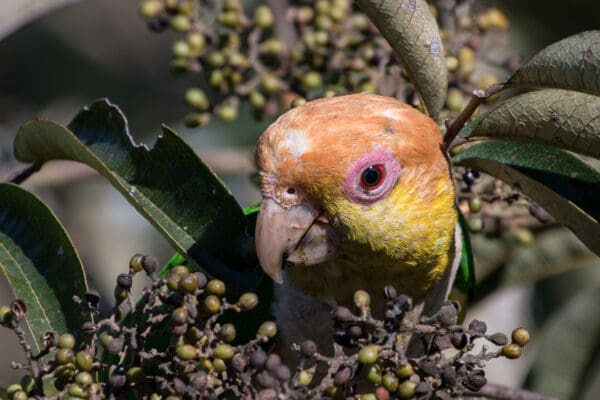
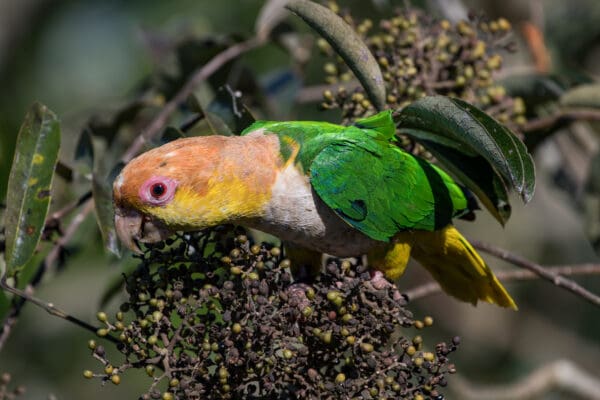
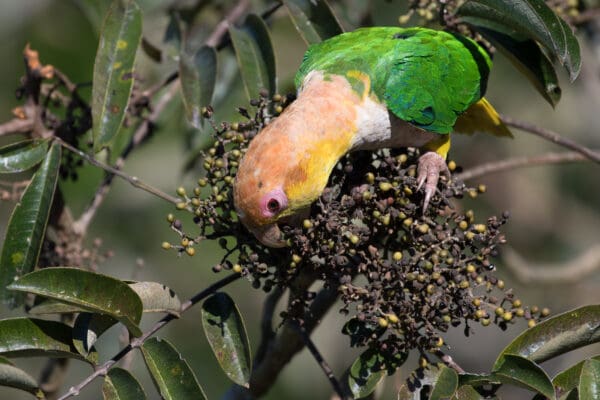
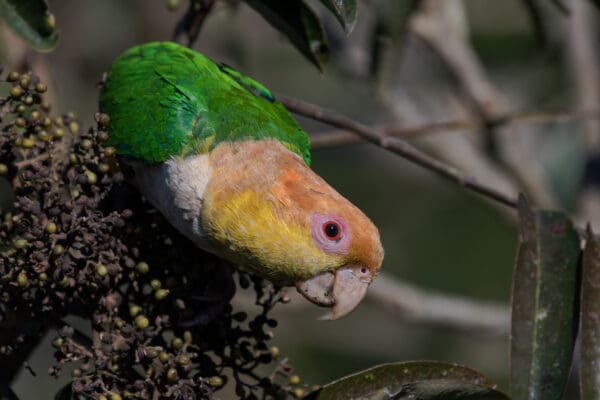
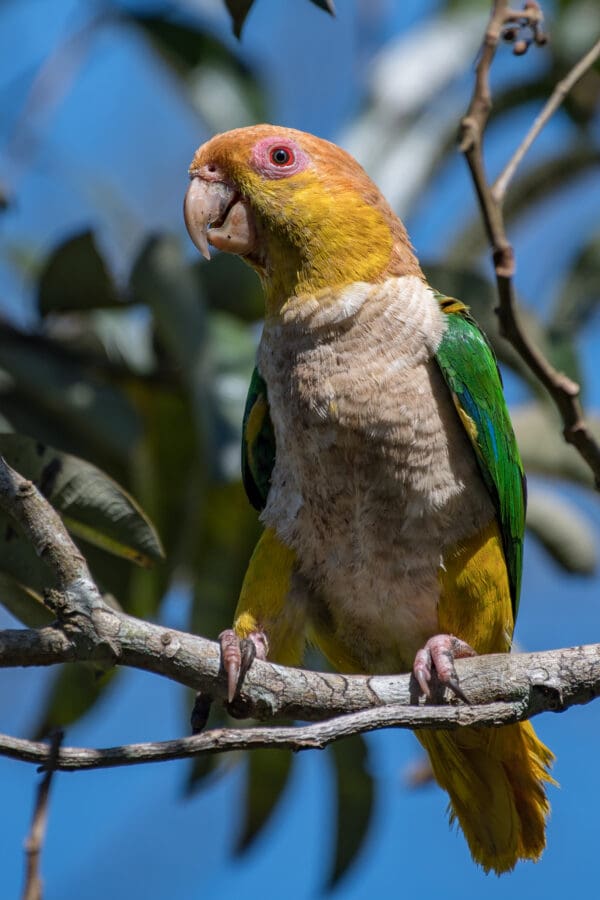
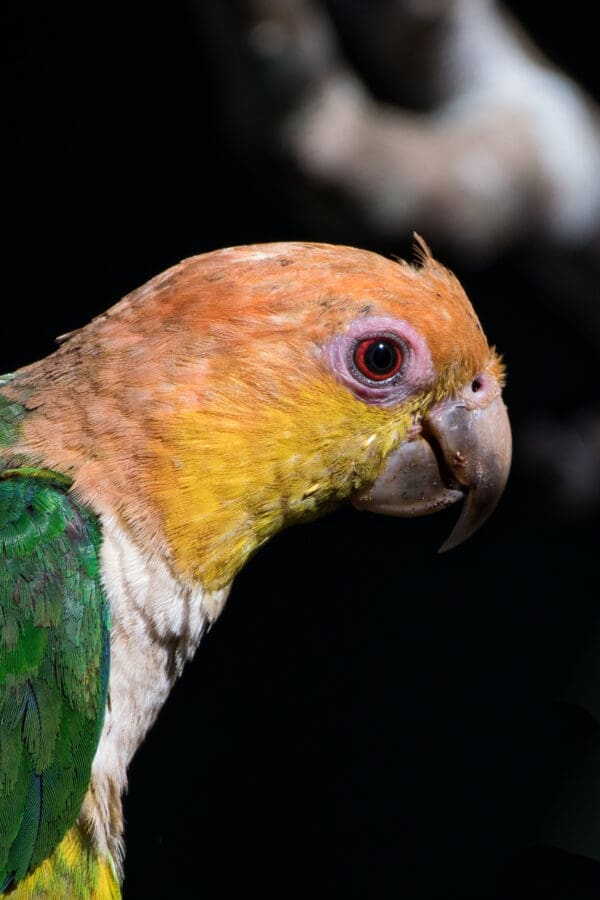
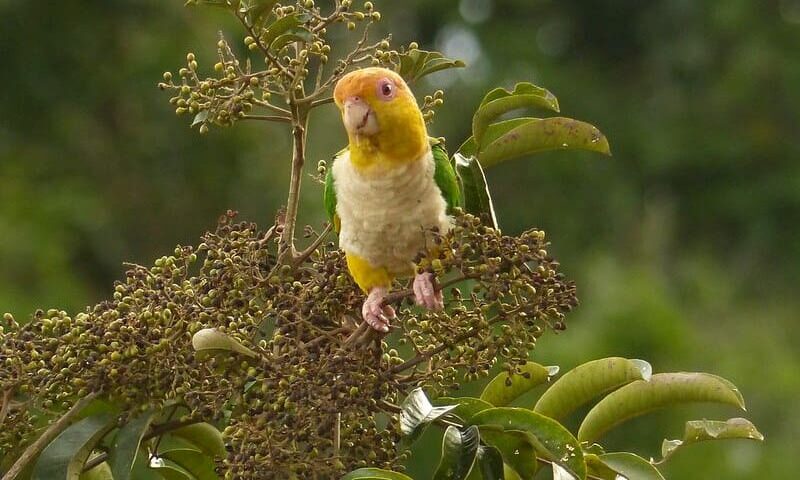
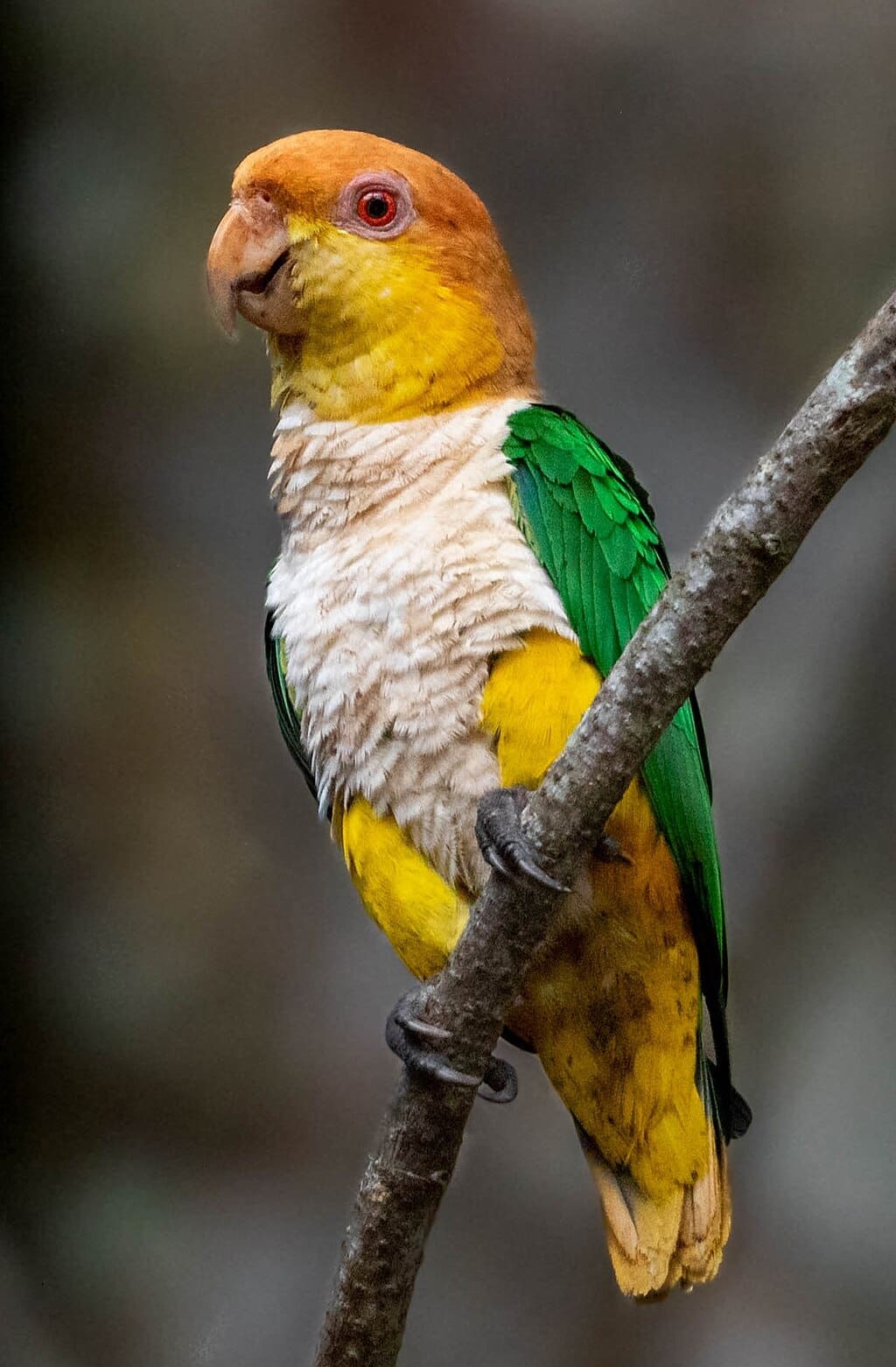
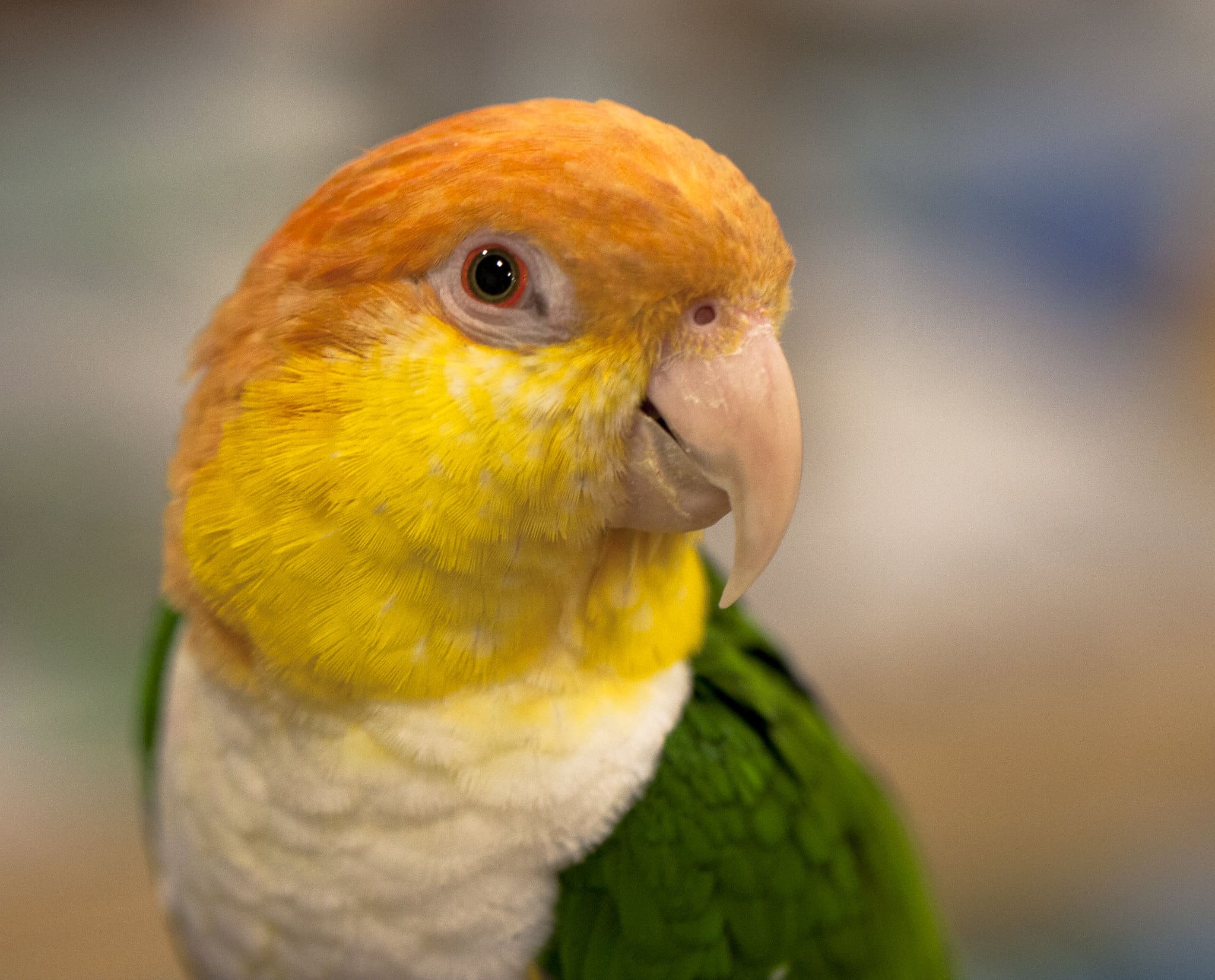
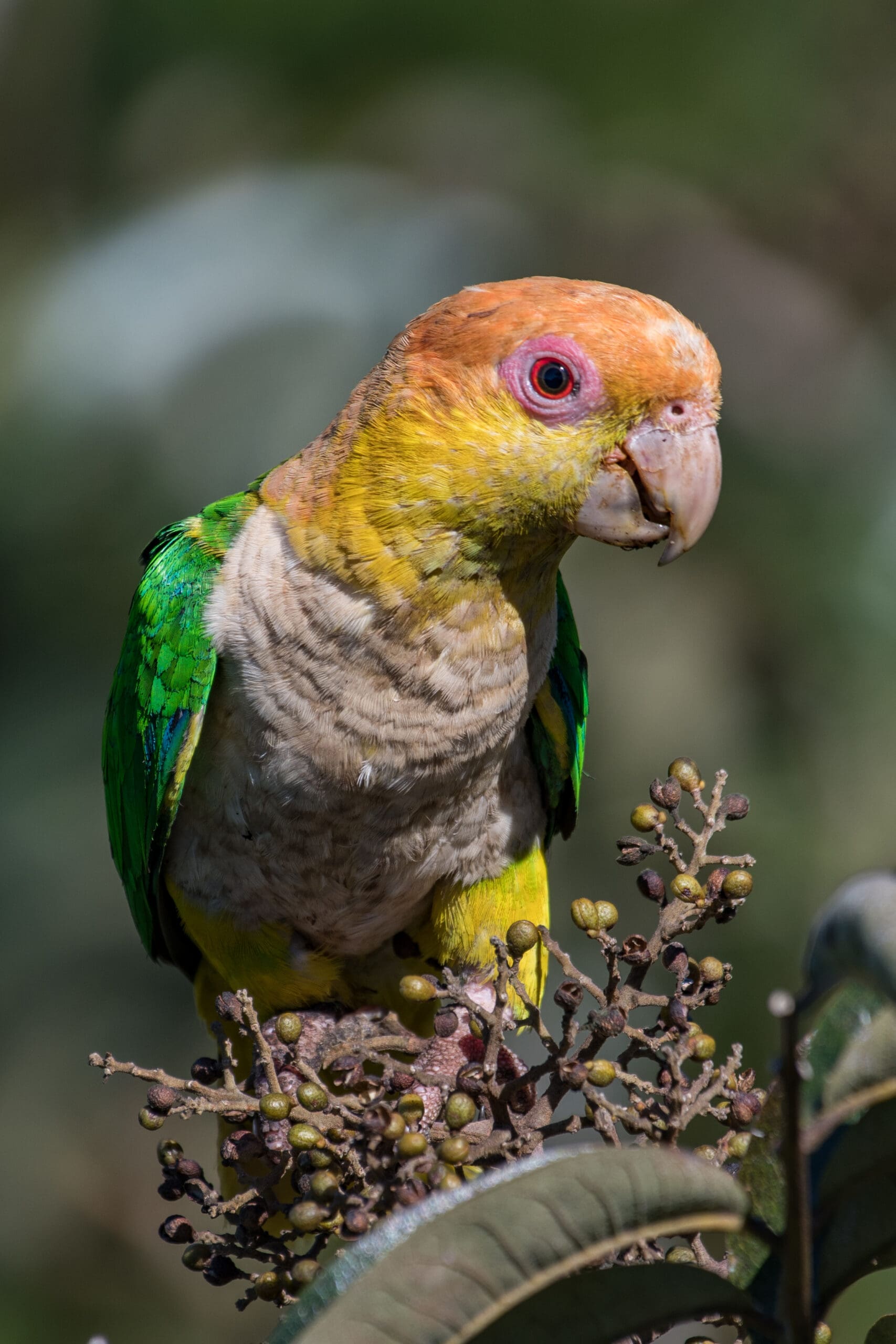
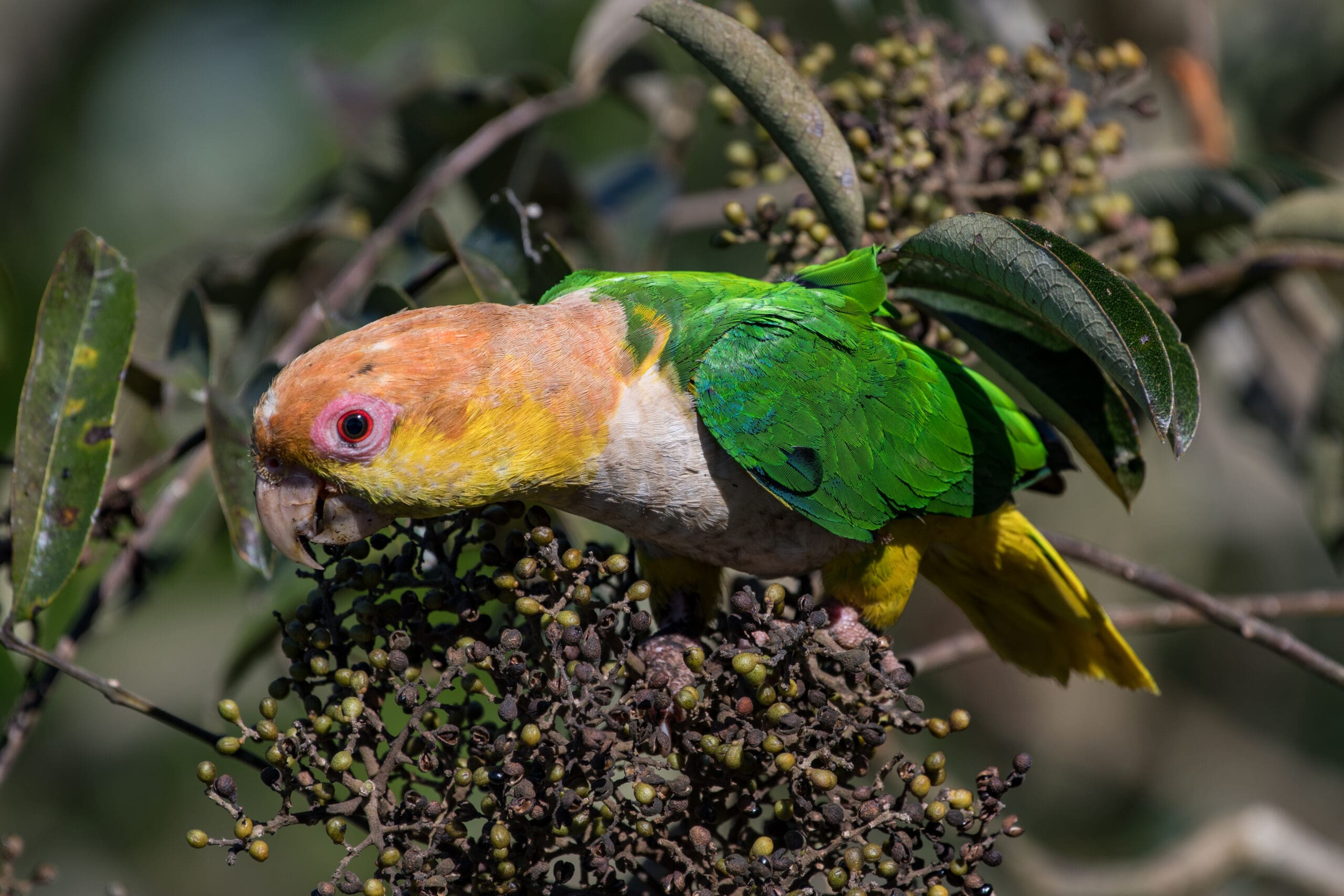
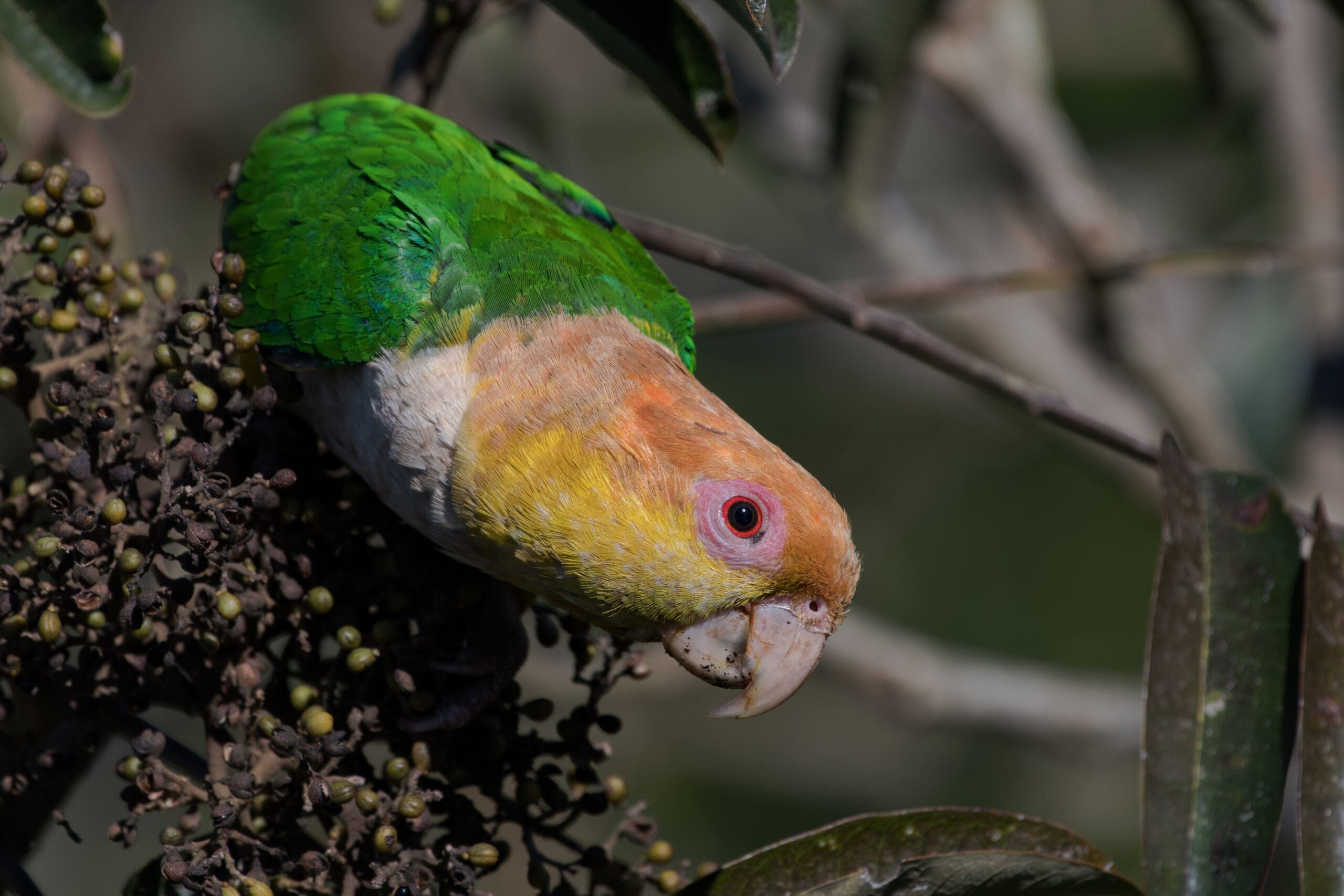
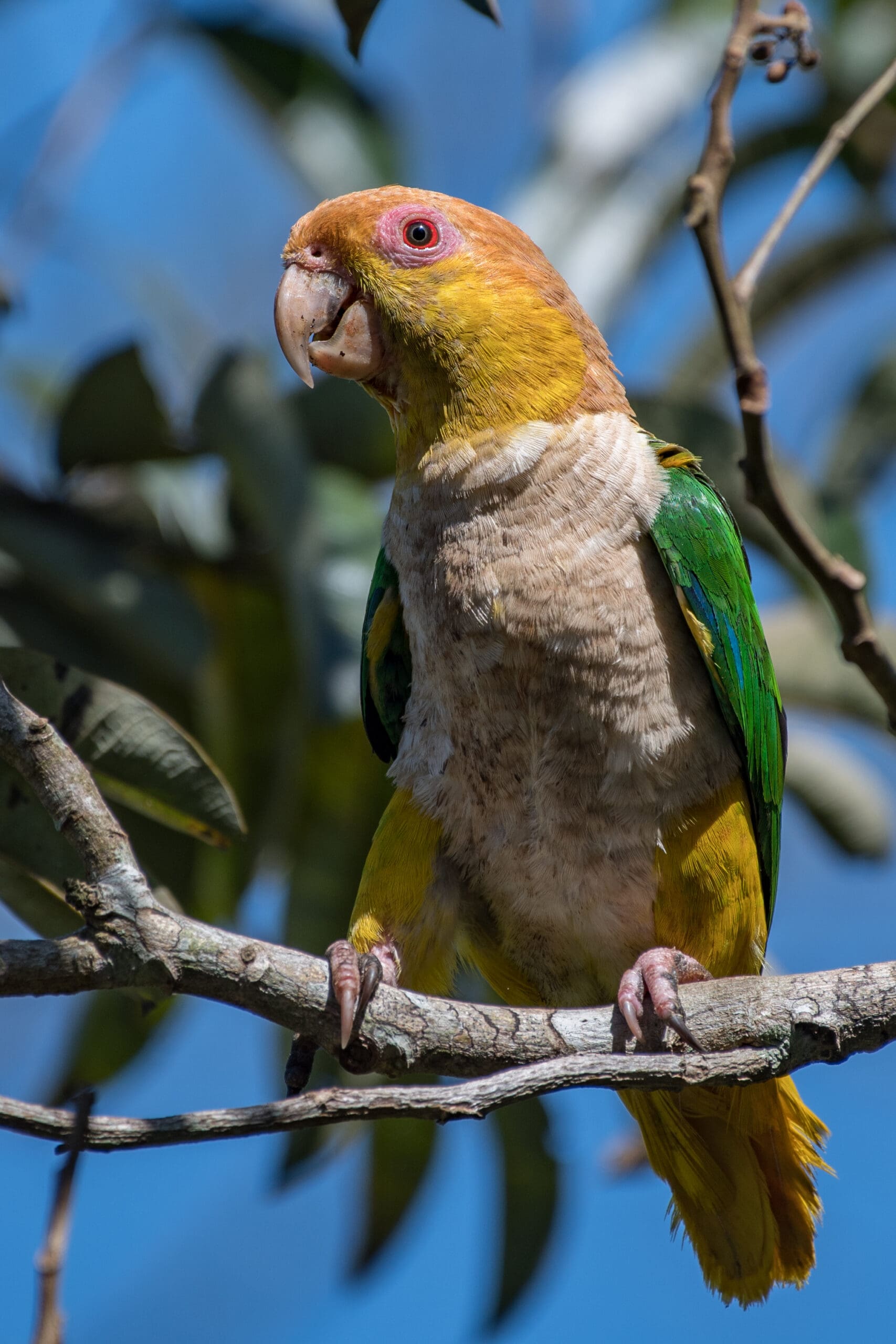
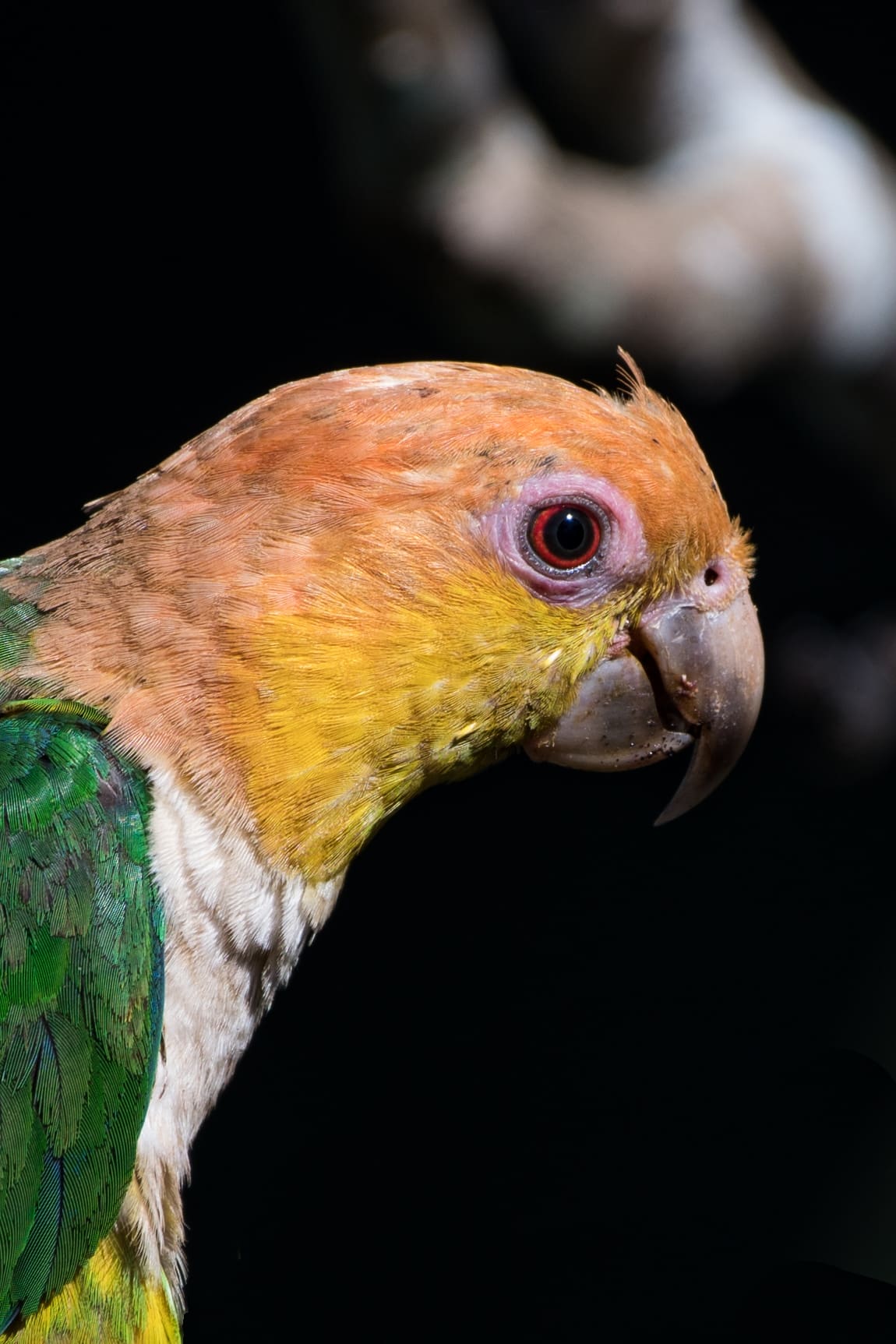
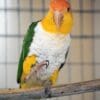
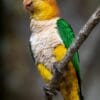
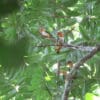
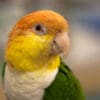
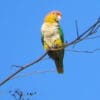
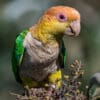
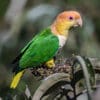
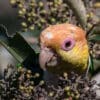
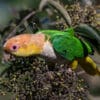
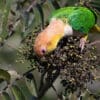
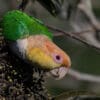
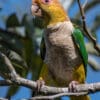
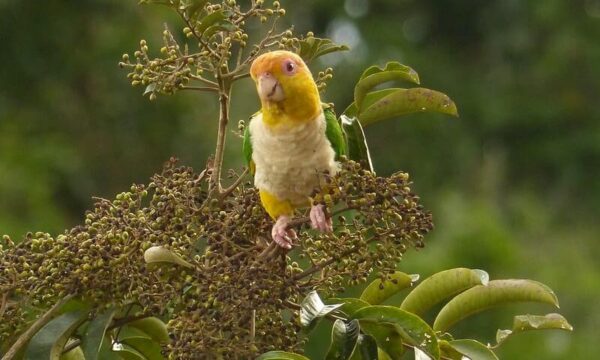
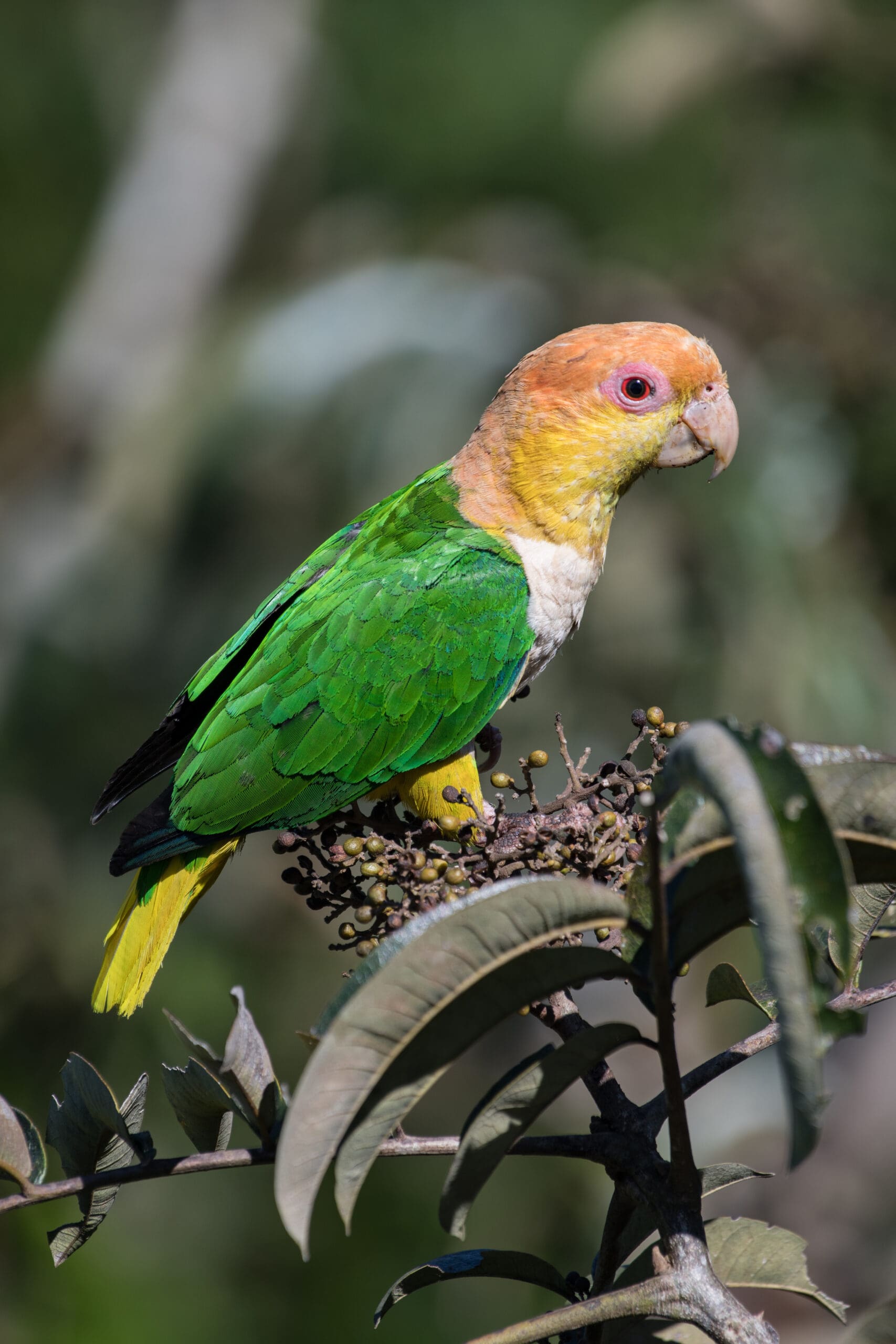
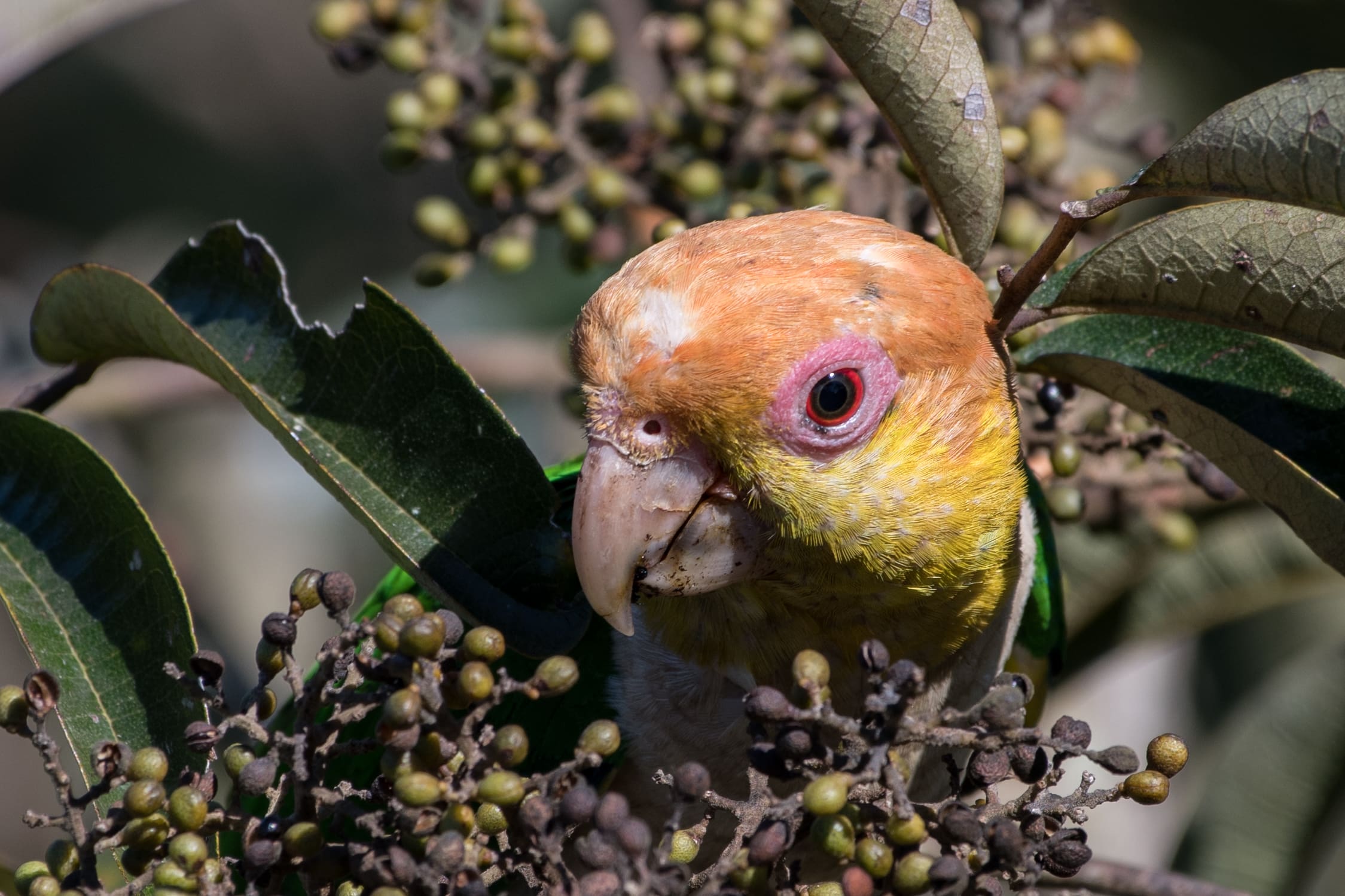
P.l. leucogaster: Both adults apricot crown, nape, hindneck and upper ear coverts; yellow lores throat and sides of head; green upperparts; secondary feathers with blue margins; creamy white breast and abdomen; green thighs; undertail coverts yellow; underwing coverts green; uppertail green. Beak horn-coloured. Eye ring bare and pink. Eye orange/red.
P.l. xanthurus: Both adults in general paler; yellow thighs, flanks, undertail coverts and all of tail; rump and upper tail coverts yellow, mixed with green.
P.l. xanthomerius: Both adults yellow thighs and flanks; tail green.

Colour Juvenile:

P.l. leucogaster: Dark feathers in apricot cap; white belly flecked with yellow. Eye ring grey, eye brown.

Call:

Wide variety of calls, including whistles, chirrups, and shrieks. Loud alarm call.  Also songlike.  Low soft growl in captive birds.

Xeno-canto Wildlife Sounds-White-bellied Parrot

More Information:

Avibase

Content Sources:

CITES
Cornell Lab of Ornithology/Birds of the World
Parrots: A Guide to Parrots of the World, Juniper and Parr, 1998
D. Milpacher, World Parrot Trust, pers. comm.
Parrots of the World, Forshaw and Cooper, 1989. 2010 edition
Parrots of the World, Forshaw, 2006.
Parrots in Aviculture, Low, 1992.
Psittacine Aviculture, Schubot, Clubb and Clubb, 1992.

Captive Status:

Uncommon

Longevity:

25-40 yrs.

Housing:

Aviary or suspended cage, minimum length 2 m (6.5 ft).

Diet:

Mixture of soaked, sprouted or dry seed, sprouted beans, fresh vegetables such as: carrot, peas in the pod, kale, broccolini, red pepper; emphasis on fresh fruit such as: apple, orange, banana, pomegranate, berries, kiwi fruit, pear apple, pears, mangos, papaya; millet sprays, complete kibble.
Enrichment:

Foot toys, bird safe chewable branches of pine, fir, elder or willow, sterilized pine cones, hanging toys, ladders, vegetable tanned leather knotted toys, puzzle toys, bathing, socialization.

Nest Box Size:

Vertical box 12″ x 12″ x 18″ (30.5 cm x 30.5 cm x 46 cm).

Clutch Size:

2 to 4

Fledging Age:

10 weeks

Hatch Weight:

Peak Weight:

Weaning Weight:

World Population:

Unknown; nominate leucogaster in the most danger. Decreasing.

IUCN Red List Status:
Not Evaluated

CITES Listing:
Appendix II

Threat Summary:

Some trapping; declining locally (eastern Amazonia) due to deforestation and possibly extinct in Santa Cruz, Bolivia.

Range:

P.l. leucogaster: South of the Amazon River in northern Brazil, from northwestern Maranhão and eastern Para to northwestern Mato Grosso and west to lower Rio Madeira, northeastern Amazonas.
P.l. xanthurus:  Brazil south of the Amazon, from Rio Purús and Rio Juruá to the Rio Madeira catchment in Amazonas.
P.l. xanthomerius: Eastern Peru (east of Rio Ucayali) and Bolivia (formerly south to Santa Cruz) to western Brazil south of the Amazon (east to Rio Juruá); recently also recorded in extreme southeastern Colombia north of the Amazon.

Habitat:

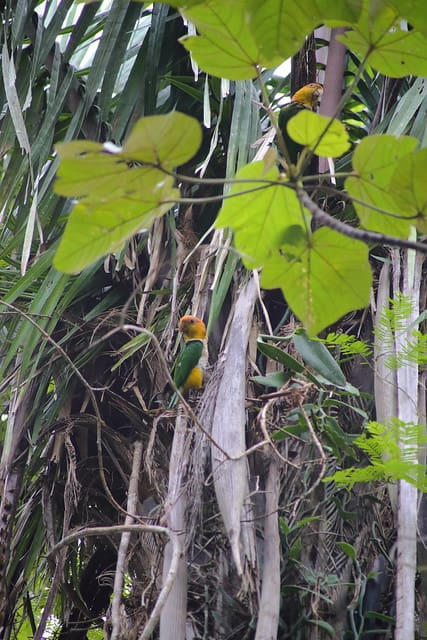
Found in humid tropical terra firme forest, more particularly seasonally flooded várzea forest along watercourses, and possibly prefers margins and openings to continuous forest. Confined to lowlands.

Wild Diet:

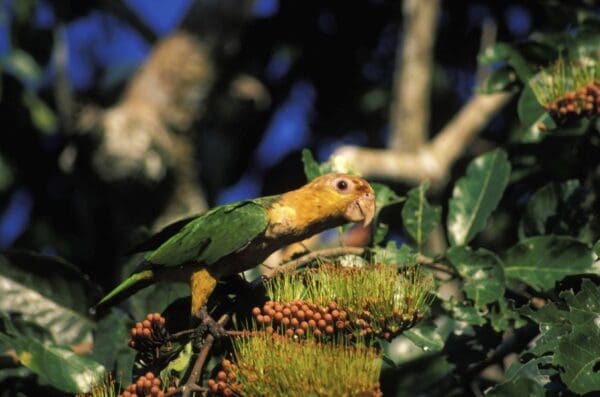
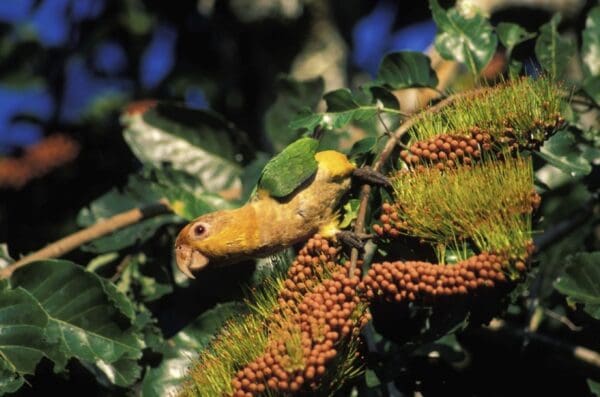
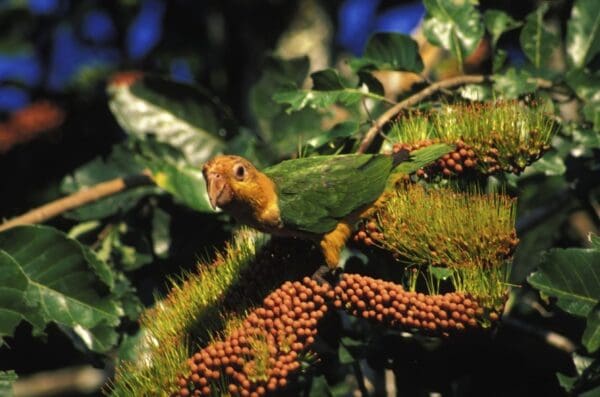
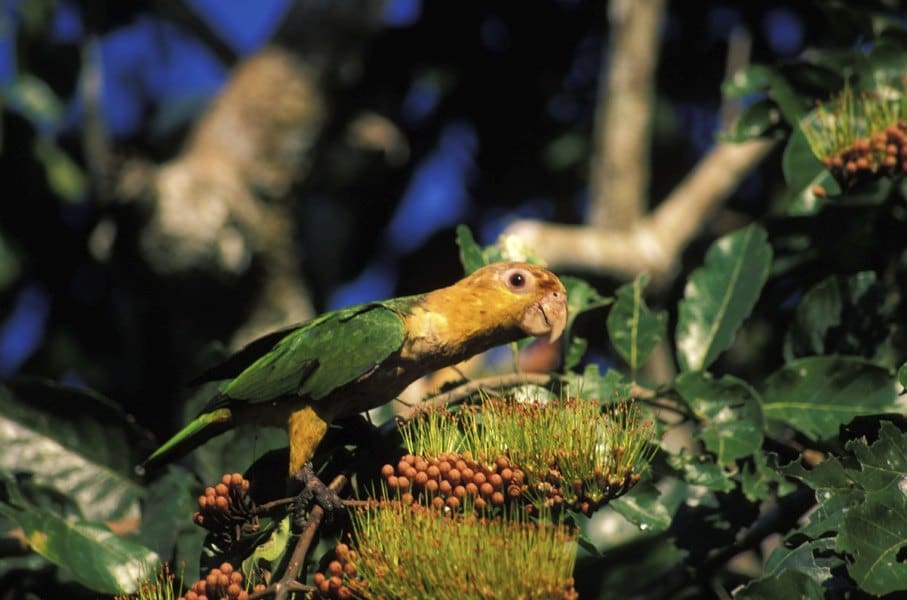
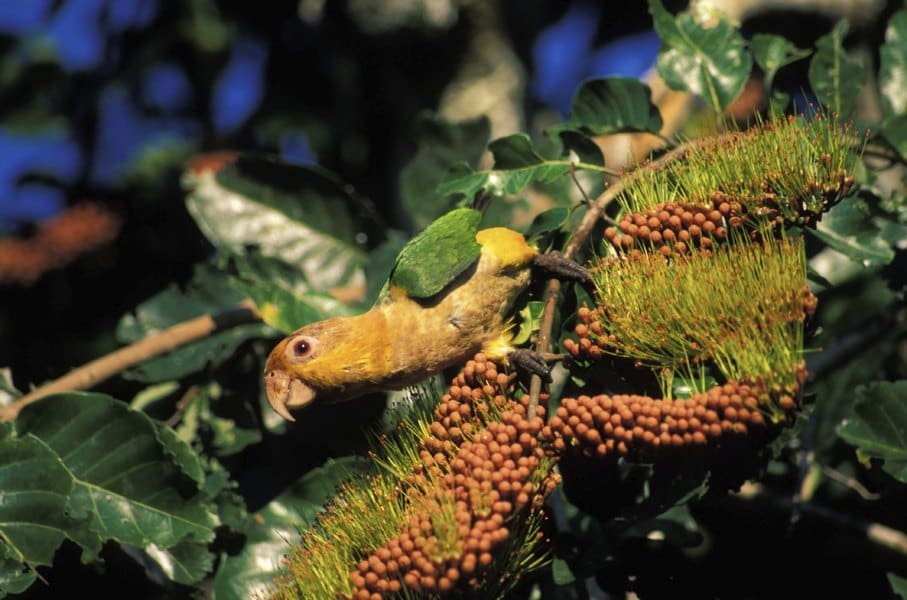
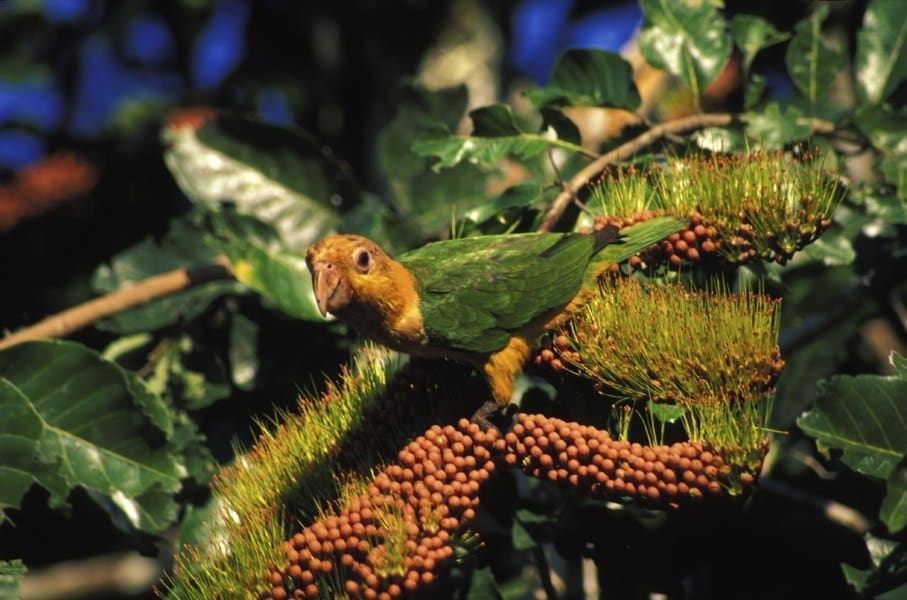
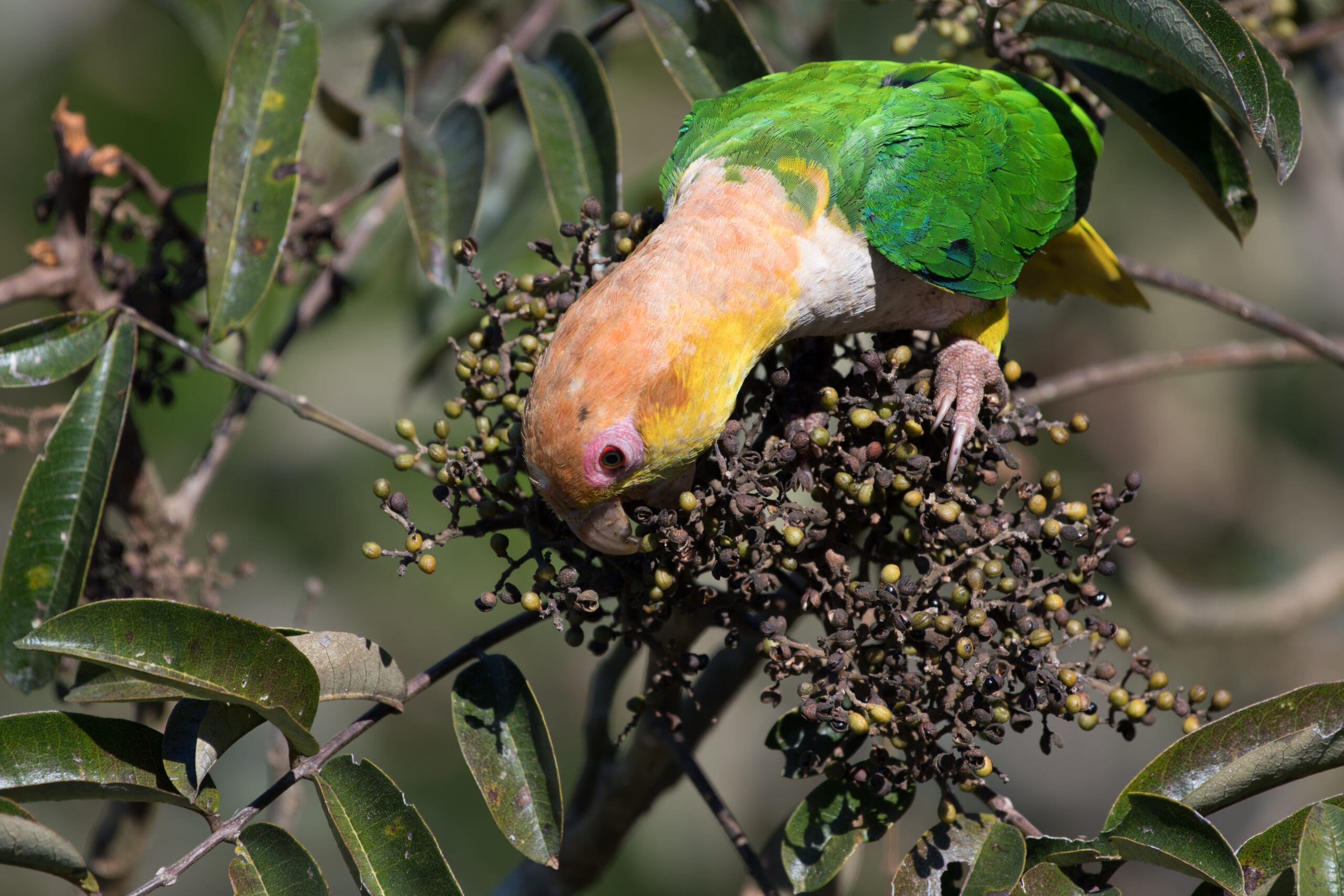
Feeds high in forest canopy, where they eat seeds, palm fruit (including Euterpe oleracea), flowers and berries.

Ecology and Behaviour:

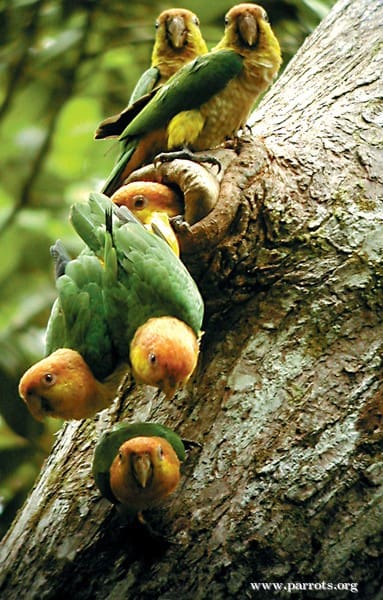
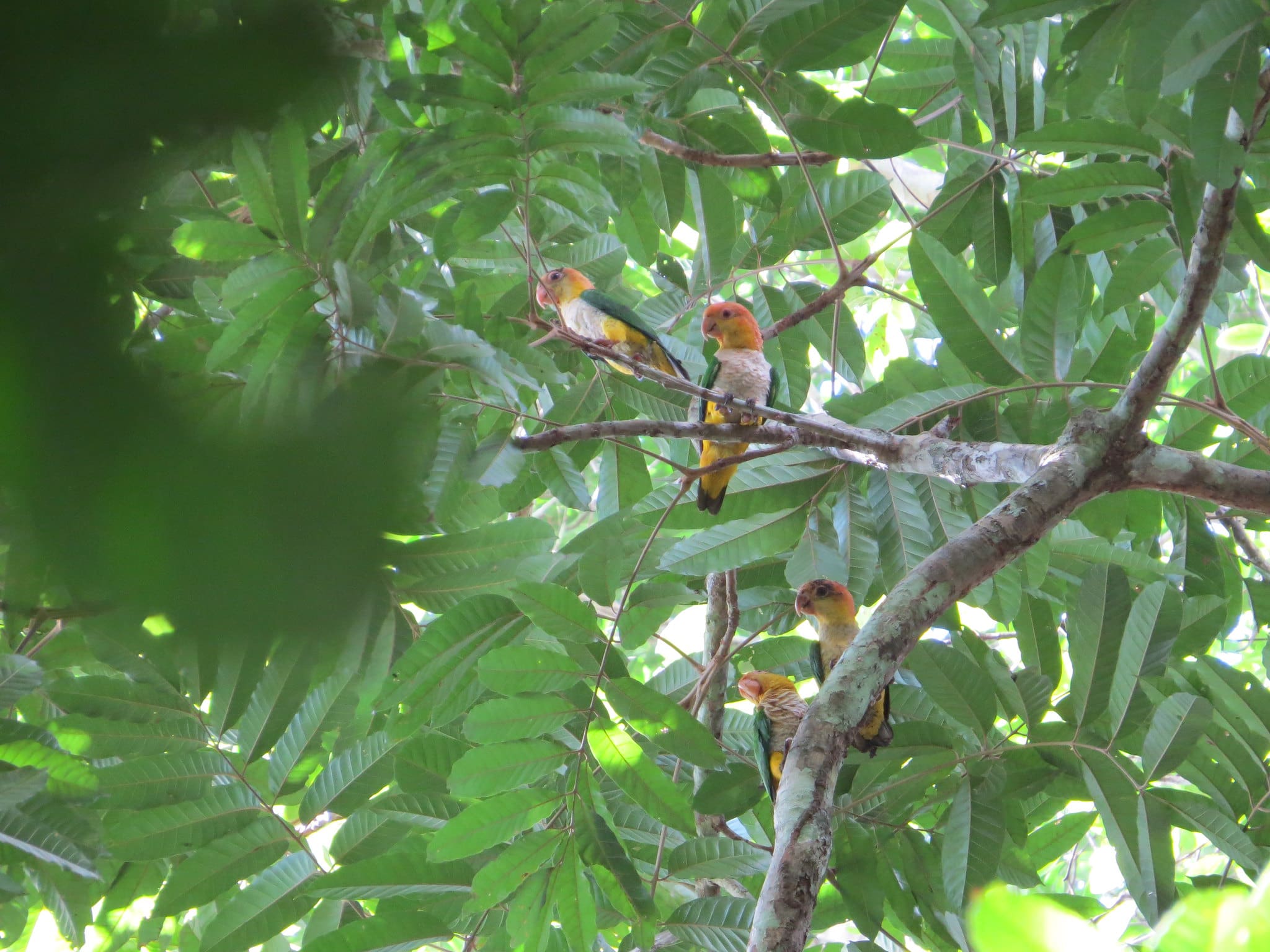
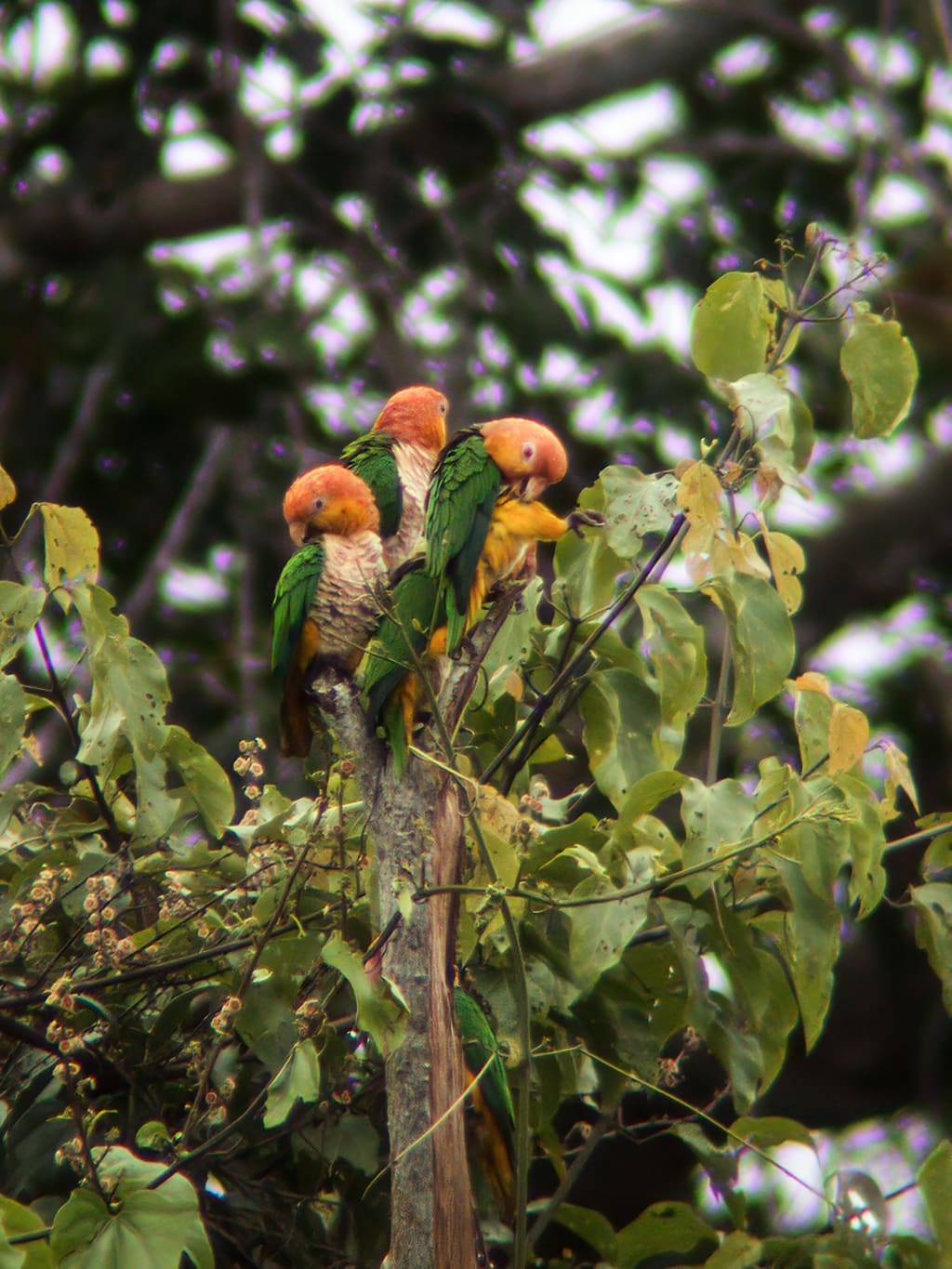
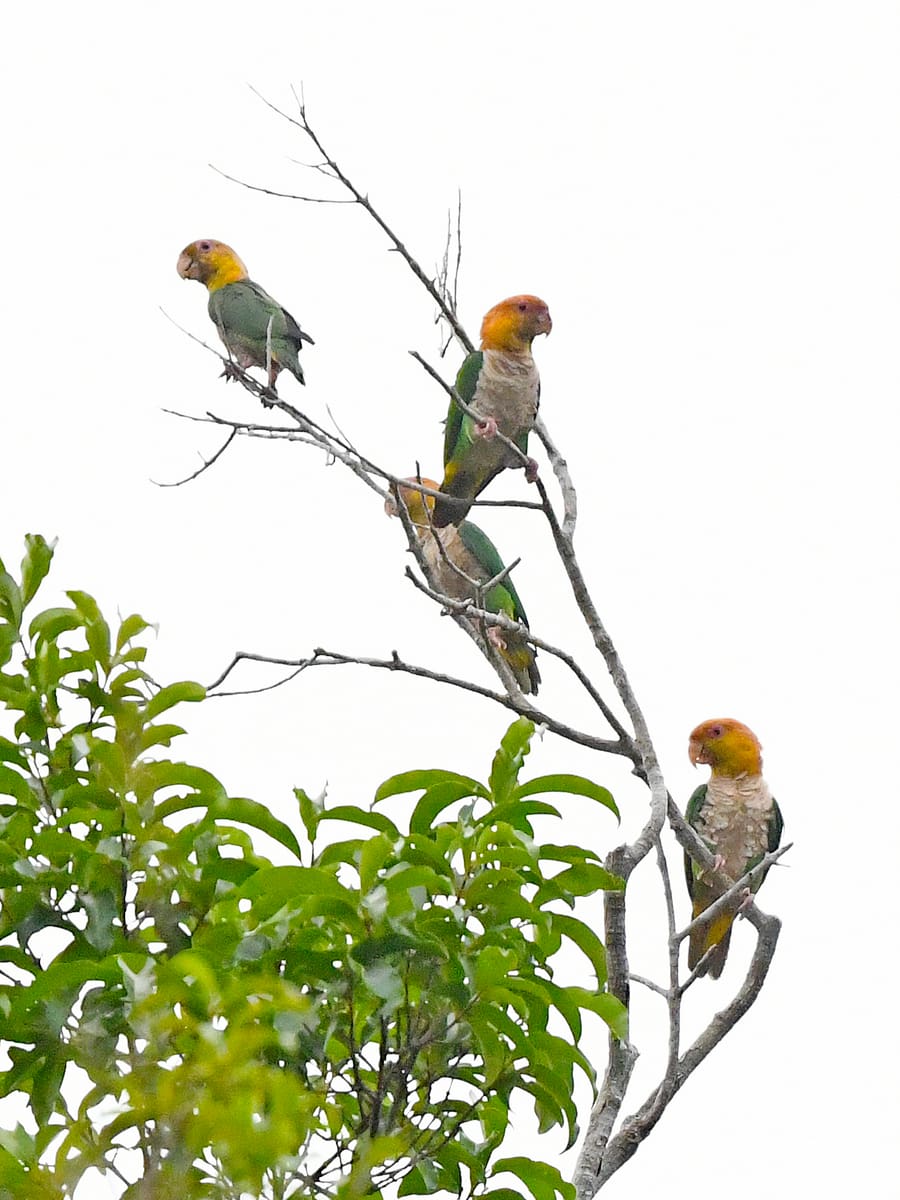
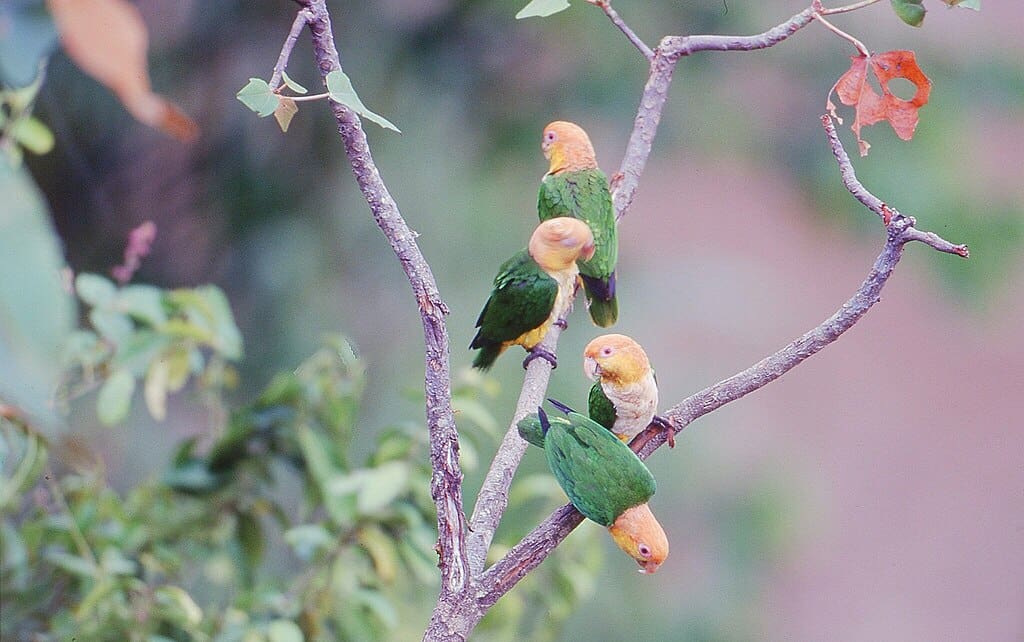
Social, often seen in the company of Blue-headed Parrot (Pionus menstruus) in eastern Amazonia. Roosts communally. Usually in small groups, but also up to 30 individuals are seen. Sentinel birds will sound alarm at sign of danger.

Clutch and Egg Size:

2 to 4 eggs, 30 x 25 mm (1.2 x 1 in).

Breeding Season:

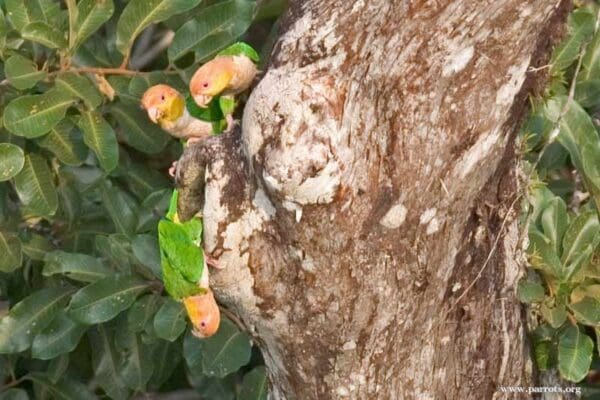
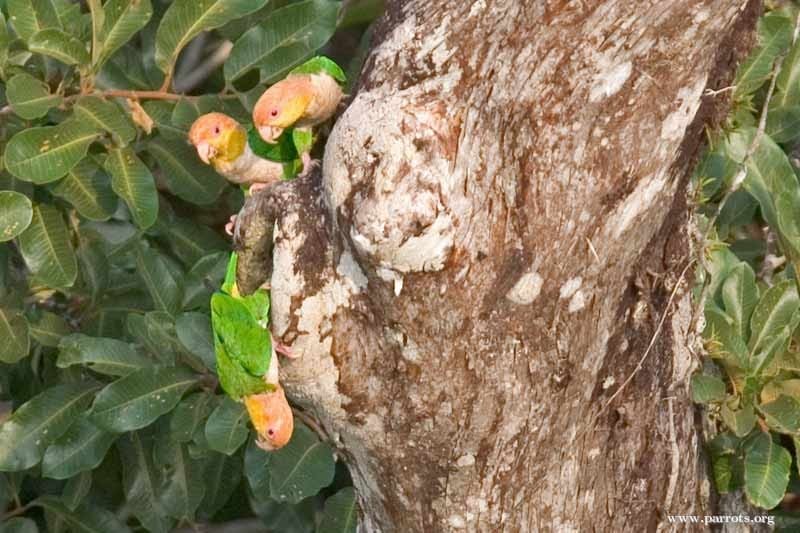
November-January; nest is in high tree cavity.

Related Links:

Join Our Flock

FlockTalk our monthly newsletter for parrot people everywhere:

+ News from the world of parrots

+ Updates on wild parrot projects

+ Inspiring updates from partners

+ Real stories from the parrot flock

+ Plus, expert tips for caring for your feathered friends at home.
 

Stay In The Loop, Sign Up Now.
FlockTalk: our monthly newsletter for parrot people everywhere:

Parrot news. Conservation wins. Pet care tips. All in one monthly email.

We do not sell or share your information with anyone